
 E-submission
Search
- Page Path
- HOME > Search
- Prediction of TP53 mutations by p53 immunohistochemistry and their prognostic significance in gastric cancer
- Hye Jung Hwang, Soo Kyung Nam, Hyunjin Park, Yujun Park, Jiwon Koh, Hee Young Na, Yoonjin Kwak, Woo Ho Kim, Hye Seung Lee
- J Pathol Transl Med. 2020;54(5):378-386. Published online July 1, 2020
- DOI: https://doi.org/10.4132/jptm.2020.06.01

- 16,222 View
- 300 Download
- 51 Web of Science
- 45 Crossref
-
 Abstract
 PDF
PDF Supplementary Material
 - Background
Recently, molecular classifications of gastric cancer (GC) have been proposed that include TP53 mutations and their functional activity. We aimed to demonstrate the correlation between p53 immunohistochemistry (IHC) and TP53 mutations as well as their clinicopathological significance in GC.
Methods
Deep targeted sequencing was performed using surgical or biopsy specimens from 120 patients with GC. IHC for p53 was performed and interpreted as strong, weak, or negative expression. In 18 cases (15.0%) with discrepant TP53 mutation and p53 IHC results, p53 IHC was repeated.
Results
Strong expression of p53 was associated with TP53 missense mutations, negative expression with other types of mutations, and weak expression with wild-type TP53 (p<.001). The sensitivity for each category was 90.9%, 79.0%, and 80.9%, and the specificity was 95.4%, 88.1%, and 92.3%, respectively. The TNM stage at initial diagnosis exhibited a significant correlation with both TP53 mutation type (p=.004) and p53 expression status (p=.029). The Kaplan-Meier survival analysis for 109 stage II and III GC cases showed that patients with TP53 missense mutations had worse overall survival than those in the wild-type and other mutation groups (p=.028). Strong expression of p53 was also associated with worse overall survival in comparison to negative and weak expression (p=.035).
Conclusions
Results of IHC of the p53 protein may be used as a simple surrogate marker of TP53 mutations. However, negative expression of p53 and other types of mutations of TP53 should be carefully interpreted because of its lower sensitivity and different prognostic implications. -
Citations
Citations to this article as recorded by
- The future is now: advancing p53 immunohistochemistry in Barrett's oesophagus and its implication for the everyday pathologist
Yevgen Chornenkyy, Monika Vyas, Vikram Deshpande
Histopathology.2026; 88(2): 380. CrossRef - Advancement in preclinical development of cancer treatment agents through modulation of Rac1: From EHop-016 to natural products
Yingyi Liu, Sze-Nga Wong, Aiping Lyu, Joshua Ka-Shun Ko
Biochimica et Biophysica Acta (BBA) - Reviews on Cancer.2026; 1881(1): 189522. CrossRef - Tumor-Associated Macrophage Infiltration and PD-L1 Expression in Gastric Cancer According to a Modified TCGA-Based Classification
Boram Song, Dong-Hoe Koo, Eo Jin Kim, In-Gu Do, Jinah Chu, Kyungeun Kim, Hyebin Lee, Min-Jung Kwon, Jung Ho Park, Byung Ho Son, Chang Hak Yoo, Seoung Wan Chae
Journal of Gastric Cancer.2026; 26(2): 247. CrossRef - Tumor microenvironment dynamics in gastric cancer pathogenesis and therapeutic resistance
Zhenhua Lu, Qinnan Zhang, Jing Han, Jiafu Ji, Xiaofang Xing
Molecular Cancer.2026;[Epub] CrossRef - Captivating Synergistic, Dose-Dependent Anticancer Effects of Tumor-Regulation Modulators Chloroquine and Ivermectin Completely Abolished by an Opposing Modulator, Deoxycholic Acid, in Hamster Fibrosarcoma: In Vivo, In Vitro, and Literature Review
Kosta J. Popović, Dušica J. Popović, Dejan Miljković, Jovan K. Popović, Mihalj Poša, Jovana Drljača Lero, Zana Dolićanin
Pharmaceuticals.2026; 19(3): 407. CrossRef - Comparative study of clinical features, pathology, and immunophenotype between HIV-related cutaneous and visceral Kaposi’s sarcoma
Jingjing Xu, Jing Zhou, Xiaoli Huang, Minmin Wu, Wenjuan Guo, Keyu Liu, Yuexiang Yang, Guangling Yang, Shu Song
BMC Cancer.2026;[Epub] CrossRef -
TP53 mutation landscape and patient survival in oral squamous cell carcinoma
Mebae Ichikawa, Yusuke Kondo, Joaquim Carreras, Masashi Sasaki, Shunsuke Nagase, Yasutaka Hoshimoto, Masashi Tamura, Masahiro Uchibori, Takayuki Aoki, Naoya Nakamura, Yohei Masugi, Yoshihide Ota
Japanese Journal of Clinical Oncology.2026; 56(7): 837. CrossRef - Expression of p53 and p63 proteins and their correlation with histological grades among gastric carcinoma specimens at Mbarara Regional Referral Hospital
Lydia Jolly Ninsiima, Abraham Birungi, Richard Kasadha, Michael Junior Mugisa, Leuben Tibenderana, Nicholas Nuwashaba, Saphurah Nabaasa, Hassan Wasswa, Lawrence Amadile, Frank Ssedyabane
African Journal of Laboratory Medicine.2026;[Epub] CrossRef - A Molecular and Computational Study on the Effects of 5-Fluorouracil, and Dicyclomine on AGS Cells: Regulation of P53 and SNAIL2 Pathways
Fariba Ghodrati, Mahdi Bagheri, Seyedeh Yasaman Kolki, Parham Motamedi, Elham Sadeghi, Hossein Ebrahimi, Dhifaf Saleem Kareem Maliki, Hadis Musavi
Pharmaceutical Sciences.2026; 32(2): 291. CrossRef - MiT fusions, TSC1–TSC2 divergence, and stem-like programs reveal distinct origins and vulnerabilities in PEComa
Justine Gantzer, Xiaofan Lu, Céline Charon-Barra, Charles Vinson, Noëlle Weingertner, Antonin Fattori, Marie-Pierre Chenard, Damien Plassard, Serge Vicaire, François Le Loarer, Maud Toulmonde, Marie Karanian, Mehdi Brahmi, Carine Ngo, Axel Le Cesne, Alice
Nature Communications.2026;[Epub] CrossRef - Prognostic significance and tumor cell interactions of tumor-associated neutrophils in gastric cancer
Soo Kyung Nam, Seo Hwan Yu, Sun-Young Ahn, Yujun Park, Hyeon Jeong Oh, Yoonjin Kwak, Seong-Ho Kong, Do Joong Park, Hyuk-Joon Lee, Han-Kwang Yang, Hye Seung Lee
Molecular Medicine.2026;[Epub] CrossRef - Linking p53 immunostaining to TP53 mutation status in patients with non-small cell lung cancer
Taeyeong Kim, Suyeon Kim, Sangjin Lee, Soohyun Hwang, Joungho Han, Hoyeon Jeong, Yoon-La Choi
Pathology.2025; 57(7): 881. CrossRef - Correlation of TP53 Genetic Alterations with p53 Immunohistochemical Expression and Their Prognostic Significance in DLBCL
Chen Chen, Zijuan Hu, Min Ren, Longlong Bao, Ran Wei, Tian Tian, Xiaoli Zhu, Qianming Bai, Baohua Yu, Xiaoqiu Li, Xiaoyan Zhou
Current Oncology.2025; 32(9): 488. CrossRef - Immunophenotypic Panel for Comprehensive Characterization of Aggressive Thyroid Carcinomas
Mihail Ceausu, Mihai Alin Publik, Dana Terzea, Carmen Adina Cristea, Dumitru Ioachim, Dana Manda, Sorina Schipor
Cells.2025; 14(19): 1554. CrossRef - Multiple approaches revealed MGc80‐3 as a somatic hybrid with HeLa cells rather than a gastric cancer cell line
Fang Cao, Hao Sun, Zhenli Yang, Yanhua Bai, Xiao Hu, Yuhong Hou, Xiaocui Bian, Yuqin Liu
International Journal of Cancer.2024; 154(1): 155. CrossRef - In Response to p53 Immunohistochemical Staining and TP53 Gene Mutations in Endometrial Cancer: Does Null Pattern Correlate With Prognosis?
Ikuko Sakamoto, Keiko Kagami, Takahiro Nozaki, Yosuke Hirotsu, Kenji Amemiya, Toshio Oyama, Masao Omata
American Journal of Surgical Pathology.2024; 48(3): 374. CrossRef - CHEK2 germline variants identified in familial nonmedullary thyroid cancer lead to impaired protein structure and function
Carolina Pires, Inês J. Marques, Mariana Valério, Ana Saramago, Paulo E. Santo, Sandra Santos, Margarida Silva, Margarida M. Moura, João Matos, Teresa Pereira, Rafael Cabrera, Diana Lousa, Valeriano Leite, Tiago M. Bandeiras, João B. Vicente, Branca M. Ca
Journal of Biological Chemistry.2024; 300(3): 105767. CrossRef - The spectrum of TP53 mutations in Rwandan patients with gastric cancer
Augustin Nzitakera, Jean Bosco Surwumwe, Ella Larissa Ndoricyimpaye, Schifra Uwamungu, Delphine Uwamariya, Felix Manirakiza, Marie Claire Ndayisaba, Gervais Ntakirutimana, Benoit Seminega, Vincent Dusabejambo, Eric Rutaganda, Placide Kamali, François Ngab
Genes and Environment.2024;[Epub] CrossRef - Gastric cancer molecular classification based on immunohistochemistry and in‐situ hybridisation and mortality
Maarit Eskuri, Eva‐Maria Birkman, Joonas H Kauppila
Histopathology.2024; 85(2): 327. CrossRef - Redefining aberrant P53 expression of gastric cancer and its distinct clinical significance among molecular-histologic subtypes
Shih-Chiang Huang, Ian Yi-Feng Chang, Tse-Ching Chen, Hsiao-Ching Lin, Chun-Yi Tsai, Jun-Te Hsu, Chun-Nan Yeh, Shih-Cheng Chang, Ta-Sen Yeh
Asian Journal of Surgery.2024; 47(11): 4699. CrossRef - Assessment of TP53 and CDKN2A status as predictive markers of malignant transformation of sinonasal inverted papilloma
Soohyeon Kwon, Jeong-Whun Kim, Eun Sun Kim, Jin Ho Paik, Jin-Haeng Chung, Sung-Woo Cho, Tae-Bin Won, Chae-Seo Rhee, Jee Hye Wee, Hyojin Kim
Scientific Reports.2024;[Epub] CrossRef - Implementing an integrated molecular classification for gastric cancer from endoscopic biopsies using on-slide tests
Simona Costache, Adelina Baltan , Sofia Diaz McLinn , Mattia Pegoraro , Rebecca de Havilland , Matthew Porter , Ana Lerga , Teresa Thomas , Alina Elena Chefani
Romanian Journal of Morphology and Embryology.2024; 65(2): 257. CrossRef - Application of NGS molecular classification in the diagnosis of endometrial carcinoma: A supplement to traditional pathological diagnosis
Qunxian Rao, Jianwei Liao, Yangyang Li, Xin Zhang, Guocai Xu, Changbin Zhu, Shengya Tian, Qiuhong Chen, Hui Zhou, Bingzhong Zhang
Cancer Medicine.2023; 12(5): 5409. CrossRef - Predictive value of p53 and AXL immunostaining for the efficacy of immune checkpoint inhibitor-based therapy after osimertinib treatment in patients with epidermal growth factor-mutant non-small cell lung cancer
Kenji Morimoto, Tadaaki Yamada, Ryo Sawada, Koichi Azuma, Yasuhiro Goto, Taishi Harada, Shinsuke Shiotsu, Nobuyo Tamiya, Yusuke Chihara, Takayuki Takeda, Osamu Hiranuma, Isao Hasegawa, Satomi Tanaka, Akihiro Yoshimura, Masahiro Iwasaku, Shinsaku Tokuda, Y
Cancer Immunology, Immunotherapy.2023; 72(6): 1699. CrossRef - Validation of p53 Immunohistochemistry (PAb240 Clone) in Canine Tumors with Next-Generation Sequencing (NGS) Analysis
Barbara Brunetti, Dario de Biase, Giulia Dellapina, Luisa Vera Muscatello, Francesco Ingravalle, Giorgia Tura, Barbara Bacci
Animals.2023; 13(5): 899. CrossRef - Mesonephric‐like adenocarcinoma of the female genital tract: novel observations and detailed molecular characterisation of mixed tumours and mesonephric‐like carcinosarcomas
Jelena Mirkovic, Ekaterina Olkhov‐Mitsel, Yutaka Amemiya, Maysa Al‐Hussaini, Sharon Nofech‐Mozes, Bojana Djordjevic, Rachel Kupets, Arun Seth, W Glenn McCluggage
Histopathology.2023; 82(7): 978. CrossRef - Clinicopathologic characterization of cervical metastasis from an unknown primary tumor: a multicenter study in Korea
Miseon Lee, Uiree Jo, Joon Seon Song, Youn Soo Lee, Chang Gok Woo, Dong-Hoon Kim, Jung Yeon Kim, Sun Och Yoon, Kyung-Ja Cho
Journal of Pathology and Translational Medicine.2023; 57(3): 166. CrossRef - P53 in Penile Squamous Cell Carcinoma: A Pattern-Based Immunohistochemical Framework with Molecular Correlation
Isabel Trias, Adela Saco, Lorena Marimon, Ricardo López del Campo, Carolina Manzotti, Oriol Ordi, Marta del Pino, Francisco M. Pérez, Naiara Vega, Silvia Alós, Antonio Martínez, Leonardo Rodriguez-Carunchio, Oscar Reig, Pedro Jares, Cristina Teixido, Tare
Cancers.2023; 15(10): 2719. CrossRef - p53/TP53 Status Assessment in Gastroesophageal Adenocarcinoma
Elisa Boldrin, Maria Assunta Piano, Francesco Bernaudo, Rita Alfieri, Maria Raffaella Biasin, Isabella Monia Montagner, Alice Volpato, Genny Mattara, Francesco Lamacchia, Giovanna Magni, Antonio Rosato, Antonio Scapinello, Pierluigi Pilati, Matteo Curtare
Cancers.2023; 15(10): 2783. CrossRef - Genomic profiling of dedifferentiated endometrial carcinomas arising in the background of high‐grade carcinoma: a targeted next‐generation sequencing study
Ekaterina Olkhov‐Mitsel, Aurelia Busca, Carlos Parra‐Herran, Yutaka Amemiya, Sharon Nofech‐Mozes, Bojana Djordjevic, Marisa R Nucci, Arun Seth, Jelena Mirkovic
Histopathology.2023; 83(3): 366. CrossRef -
Clinicopathologic Features and Prognostic Significance of Immunohistochemistry and In Situ Hybridization Based Molecular Classification in Gastric Carcinoma
Gizem Issin, İlyas Sayar, Fatih Demir, İrem Güvendir Bakkaloğlu, Mehmet Gamsizkan, Zeliha Yildiz, Ismail Yilmaz, Sevilay Akalp Özmen, Diren Vuslat Çağatay, Itır Ebru Zemheri, Murat Demiriz, Armağan Günal
Journal of Environmental Pathology, Toxicology and Oncology.2023; 42(4): 1. CrossRef - Clinicopathologic and Molecular Characterization of Anorectal Neuroendocrine Carcinomas Reveals Human Papillomavirus, p53, and c-Myc as Alternative Mechanisms of Carcinogenesis
Allison J. Cox, William E. Crowe, Qi Yang, Bin Zhang, Zoltán N. Oltvai, Xiaoyan Liao
Modern Pathology.2023; 36(11): 100295. CrossRef - Dedifferentiated Endometrial Carcinoma: A Rare Aggressive Neoplasm-Clinical, Morphological and Immunohistochemical Features
Giovanna Giordano, Elena Ferioli, Debora Guareschi, Alessandro Tafuni
Cancers.2023; 15(21): 5155. CrossRef - Characterization on the oncogenic effect of the missense mutations of p53 via machine learning
Qisheng Pan, Stephanie Portelli, Thanh Binh Nguyen, David B Ascher
Briefings in Bioinformatics.2023;[Epub] CrossRef - Adrenal Nodules Detected at Staging CT in Patients with Resectable Gastric Cancers Have a Low Incidence of Malignancy
Hae Young Kim, Won Chang, Yoon Jin Lee, Ji Hoon Park, Jungheum Cho, Hee Young Na, Hyungwoo Ahn, Sung Il Hwang, Hak Jong Lee, Young Hoon Kim, Kyoung Ho Lee
Radiology.2022; 302(1): 129. CrossRef - Intestinal-type gastric dysplasia in Helicobacter pylori-naïve patients
Kotaro Shibagaki, Ayako Itawaki, Yoichi Miyaoka, Kenichi Kishimoto, Yusuke Takahashi, Satoshi Kotani, Tsuyoshi Mishiro, Naoki Oshima, Kousaku Kawashima, Norihisa Ishimura, Hideyuki Onuma, Makoto Nagasaki, Mamiko Nagase, Asuka Araki, Kyuichi Kadota, Ryoji
Virchows Archiv.2022; 480(4): 783. CrossRef - Dedifferentiation-like tubular and solid carcinoma of the stomach shows phenotypic divergence and association with deficient SWI/SNF complex
Shih-Chiang Huang, Kuang-Hua Chen, Kwai-Fong Ng, I-Chieh Lin, Yi-Chun Chao, Ta-Sen Yeh, Huei-Chieh Chuang, Tse-Ching Chen
Virchows Archiv.2022; 480(4): 771. CrossRef - Distinct molecular phenotype and the potential prognostic value of immune prognostic index and tumor infiltrating lymphocytes in hepatoid adenocarcinoma of stomach
Muxing Kang, Xiaojing Ma, Jifei Shi, Guofeng Chen, Xiaoli Jin, Jun Wang, Lele Lin, Zhiwei Wu, Kaibo Chen, Jinghong Xu, Pintong Huang, Jian Chen
Translational Oncology.2022; 19: 101380. CrossRef - Evaluation of Tumor DNA Sequencing Results in Patients with Gastric and Gastroesophageal Junction Adenocarcinoma Stratified by TP53 Mutation Status
Anthony C Wood, Yonghong Zhang, Qianxing Mo, Ling Cen, Jacques Fontaine, Sarah E Hoffe, Jessica Frakes, Sean P Dineen, Jose M Pimiento, Christine M Walko, Rutika Mehta
The Oncologist.2022; 27(4): 307. CrossRef - Comprehensive Clinical Analysis of Gallbladder Neuroendocrine Neoplasms: A Large-Volume Multicenter Study During One Decade
Yangyang Wang, Bingfeng Huang, Qihan Fu, Jianing Wang, Mao Ye, Manyi Hu, Kai Qu, Kai Liu, Xiao Hu, Shumei Wei, Ke Sun, Wenbo Xiao, Bo Zhang, Haijun Li, Jingsong Li, Qi Zhang, Tingbo Liang
Annals of Surgical Oncology.2022; 29(12): 7619. CrossRef - Expression of SASP, DNA Damage Response, and Cell Proliferation Factors in Early Gastric Neoplastic Lesions: Correlations and Clinical Significance
Li Liang, Yijie Chai, Fei Chai, Haijing Liu, Ningning Ma, Hong Zhang, Shuang Zhang, Lin Nong, Ting Li, Bo Zhang
Pathology and Oncology Research.2022;[Epub] CrossRef - Systems biology and OMIC data integration to understand gastrointestinal cancers
Iasmin Moreira Costa Bispo, Henry Paul Granger, Palloma Porto Almeida, Patricia Belini Nishiyama, Leandro Martins de Freitas
World Journal of Clinical Oncology.2022; 13(10): 762. CrossRef - MicroRNA-552 expression in colorectal cancer and its clinicopathological significance
Joon Im, Soo Kyung Nam, Hye Seung Lee
Journal of Pathology and Translational Medicine.2021; 55(2): 125. CrossRef - Different effects of p53 protein overexpression on the survival of gastric cancer patients according to Lauren histologic classification: a retrospective study
Ki Wook Kim, Nayoung Kim, Yonghoon Choi, Won Seok Kim, Hyuk Yoon, Cheol Min Shin, Young Soo Park, Dong Ho Lee, Young Suk Park, Sang-Hoon Ahn, Do Joong Park, Hyung-Ho Kim, Hye Seung Lee, Ji-Won Kim, Jin Won Kim, Keun-Wook Lee, Won Chang, Ji Hoon Park, Yoon
Gastric Cancer.2021; 24(4): 844. CrossRef - The association between the expression of nuclear Yes-associated protein 1 (YAP1) and p53 protein expression profile in breast cancer patients
Yoon Jin Cha, Dooreh Kim, Soong June Bae, Sung Gwe Ahn, Joon Jeong, Min Kyung Cho, Pill Sun Paik, Tae-Kyung Yoo, Woo-Chan Park, Chang Ik Yoon, Elda Tagliabue
PLOS ONE.2021; 16(5): e0250986. CrossRef
- The future is now: advancing p53 immunohistochemistry in Barrett's oesophagus and its implication for the everyday pathologist
- Duodenal Adenocarcinoma of Brunner Gland Origin: A Case Report
- Ji Hye Moon, Kyoungbun Lee, Han-Kwang Yang, Woo Ho Kim
- J Pathol Transl Med. 2018;52(3):179-182. Published online December 27, 2017
- DOI: https://doi.org/10.4132/jptm.2017.10.09
- 11,877 View
- 175 Download
- 7 Web of Science
- 7 Crossref
-
Abstract
PDF
- We report a case of adenocarcinoma originating from the duodenal Brunner glands in a 47-year-old female patient. The lesion was 0.8 cm in extent and located at the posterior wall of the first part of the duodenum. Histologically, the tumor showed transition from non-neoplastic Brunner glands through dysplastic epithelium into adenocarcinoma. The carcinoma cells were strongly positive for MUC6 protein, which is an epithelial marker for the Brunner glands. Tumor protein p53 was overexpressed in the carcinoma cells, but not in the non-neoplastic or dysplastic epithelium. Dystrophic calcification was predominant. This is the first case report of duodenal adenocarcinoma of Brunner gland origin in Korea.
-
Citations
Citations to this article as recorded by- Duodenal Adenocarcinoma with a Gastric Phenotype Demonstrating a Rapidly Progressive Course
Sho Matsuyama, Akihisa Fukuda, Nobukazu Agatsuma, Masahito Hoki, Takahiro Utsumi, Hiroshi Seno
Internal Medicine.2025; 64(11): 1684. CrossRef - Relationship Between Immunophenotypes, Genetic Profiles, and Clinicopathologic Characteristics in Small Bowel Adenocarcinoma
Aitoshi Hoshimoto, Atsushi Tatsuguchi, Takeshi Yamada, Sho Kuriyama, Ryohei Hamakubo, Takayoshi Nishimoto, Jun Omori, Naohiko Akimoto, Katya Gudis, Keigo Mitsui, Shu Tanaka, Shunji Fujimori, Tsutomu Hatori, Akira Shimizu, Katsuhiko Iwakiri
American Journal of Surgical Pathology.2024; 48(2): 127. CrossRef - Recurrence of Brunner Gland Adenocarcinoma After Duodenectomy and Gastrojejunostomy
Paul Hong, Marcel Ghanim, Abdul Haseeb, Xianzhong Ding, Ayokunle T. Abegunde
ACG Case Reports Journal.2023; 10(6): e01060. CrossRef - HER2-positive adenocarcinoma arising from heterotopic pancreas tissue in the duodenum: A case report
Yoshifumi S Hirokawa, Takashi Iwata, Yoshinaga Okugawa, Koji Tanaka, Hiroyuki Sakurai, Masatoshi Watanabe
World Journal of Gastroenterology.2021; 27(28): 4738. CrossRef - Brunner’s gland adenoma is a rare cause of upper gastrointestinal bleeding: A case report and literature review
Nader Bakheet, Ahmed Cordie, Mohamed Nabil alkady, Ibrahim Naguib
Arab Journal of Gastroenterology.2020; 21(2): 122. CrossRef - Brunner's Gland Adenocarcinoma in an Aged Western Gorilla (Gorilla gorilla)
Jun Sasaki, Ippei Muneuchi, Kanako Ushio, Chihiro Sochi, Youichi Irie, Kazunori Yoshizumi, Waturu Hashimoto
Journal of Comparative Pathology.2020; 181: 47. CrossRef - Adenocarcinoma of the duodenum arising from Brunner’s gland resected by partial duodenectomy: a case report
Tetsuya Mochizuki, Nobuaki Fujikuni, Koichi Nakadoi, Masahiro Nakahara, Kazuaki Tanabe, Shuji Yonehara, Toshio Noriyuki
Surgical Case Reports.2019;[Epub] CrossRef
- Duodenal Adenocarcinoma with a Gastric Phenotype Demonstrating a Rapidly Progressive Course
- Multiple Neuroendocrine Tumors in Stomach and Duodenum in a Multiple Endocrine Neoplasia Type 1 Patient
- Bohyun Kim, Han-Kwang Yang, Woo Ho Kim
- J Pathol Transl Med. 2018;52(2):126-129. Published online December 21, 2017
- DOI: https://doi.org/10.4132/jptm.2017.09.16
- 11,217 View
- 146 Download
- 1 Web of Science
- 1 Crossref
-
Abstract
PDF
- A 67-year-old woman with a history of subtotal parathyroidectomy, distal pancreatectomy, and total splenectomy 23 years prior underwent surgical gastric resection for neuroendocrine tumors of the stomach and duodenum. Meticulous examination of the entire stomach and duodenum revealed multiple scattered, minute neuroendocrine tumors. To the best of our knowledge, this is the first case report of a patient diagnosed with gastroduodenal neuroendocrine tumors associated with multiple endocrine neoplasia type 1 (MEN 1) in whom complete histologic mapping of the whole gastrectomy specimen was performed. The presence of MEN 1–associated neuroendocrine tumors in the stomach is very rare, but should be considered in patients diagnosed with MEN 1 who present with a new tumor in the stomach.
-
Citations
Citations to this article as recorded by- A Case of Asymptomatic Multiple Endocrine Neoplasia Type I with Thymic Carcinoid
Suk Ki Park, Moon Won Lee, In Sub Han, Young Joo Park, Sung Yong Han, Joon Woo Park, Bong Eun Lee, Gwang Ha Kim, Sang Soo Kim
The Korean Journal of Helicobacter and Upper Gastrointestinal Research.2019; 19(1): 65. CrossRef
- A Case of Asymptomatic Multiple Endocrine Neoplasia Type I with Thymic Carcinoid
- Perivascular Epithelioid Cell Tumor in the Stomach
- Sun Ah Shin, Jiwoon Choi, Kyung Chul Moon, Woo Ho Kim
- J Pathol Transl Med. 2017;51(4):428-432. Published online April 4, 2017
- DOI: https://doi.org/10.4132/jptm.2016.09.16
- 11,737 View
- 142 Download
- 6 Web of Science
- 7 Crossref
-
Abstract
PDF
- Perivascular epithelioid cell tumors or PEComas can arise in any location in the body. However, a limited number of cases of gastric PEComa have been reported. We present two cases of gastric PEComas. The first case involved a 62-year-old woman who presented with a 4.2 cm gastric subepithelial mass in the prepyloric antrum, and the second case involved a 67-year-old man with a 5.0 cm mass slightly below the gastroesophageal junction. Microscopic examination revealed that both tumors were composed of perivascular epithelioid cells that were immunoreactive for melanocytic and smooth muscle markers. Prior to surgery, the clinical impression of both tumors was gastrointestinal stromal tumor (GIST), and the second case was erroneously diagnosed as GIST even after microscopic examination. Although gastric PEComa is a very rare neoplasm, it should be considered in the differential diagnosis of gastric submucosal lesions.
-
Citations
Citations to this article as recorded by- Extra-uterine Endometrial Stromal Sarcoma of the Stomach Mimicking a Gastrointestinal Stromal Tumour: A Case Report
Adam Mylonakis, Eleandros Kyros, Maria Karakeke, Eleni Karakeke, Andreas Panagakis, Pagona Kastanaki, Lysandros Karydakis, Alexandros Pergaris, Stratigoula Sakellariou, Alexandros Papalampros
Cureus.2026;[Epub] CrossRef - A Perivascular Epithelioid Cell Tumor in the Ascending Colon: A Rare Case Involving a Patient With Tuberous Sclerosis
Kai Seharada, Masato Kitazawa, Satoshi Nakamura, Yuta Yamamoto, Yuji Soejima
Cureus.2025;[Epub] CrossRef - Malignant Perivascular Epithelioid Cell Tumor of Ovary: A Rare Case Report
Anuradha Sharma, Reetika Sharma, Jyoti Bala, Monika Sharma
Journal of Mid-life Health.2025; 16(1): 107. CrossRef - A Case of a Primary Perivascular Epithelial Tumor of the Stomach with Lymph Node Metastasis
Nobuyuki NISHIDA, Hideki HIDAKA, Roko HAMADA, Takanori MEI, Kazuki TAKEDA, Kosuke MARUTSUKA, Kazuya MAEKAWA, Jiro OHUCHIDA
Nihon Rinsho Geka Gakkai Zasshi (Journal of Japan Surgical Association).2025; 86(9): 1178. CrossRef - Unusual paediatric sigmoid perivascular epithelioid cell tumour with regional lymph node metastasis treated using gemcitabine and docetaxel: a case report and literature review
Hsiu-Chung Cheng, Chia-Yu Kuo, Ching-Wen Huang, Hsiang-Hung Shih, Chih-Hung Lin, Jaw-Yuan Wang
Journal of International Medical Research.2021;[Epub] CrossRef - Gastric Perivascular Epithelioid Cell Tumor (PEComa)
Jinghong Xu, Yu Yan, Xueping Xiang, Peter Jiang, Xiangrong Hu, Wenjun Yang
American Journal of Clinical Pathology.2019; 152(2): 221. CrossRef - Robotic wedge resection of a rare gastric perivascular epithelioid cell tumor: A case report
Alessandra Marano, Francesca Maione, Yanghee Woo, Luca Pellegrino, Paolo Geretto, Diego Sasia, Mirella Fortunato, Giulio Fraternali Orcioni, Roberto Priotto, Renato Fasoli, Felice Borghi
World Journal of Clinical Cases.2019; 7(23): 4011. CrossRef
- Extra-uterine Endometrial Stromal Sarcoma of the Stomach Mimicking a Gastrointestinal Stromal Tumour: A Case Report
- Molecular Testing for Gastrointestinal Cancer
- Hye Seung Lee, Woo Ho Kim, Yoonjin Kwak, Jiwon Koh, Jeong Mo Bae, Kyoung-Mee Kim, Mee Soo Chang, Hye Seung Han, Joon Mee Kim, Hwal Woong Kim, Hee Kyung Chang, Young Hee Choi, Ji Y. Park, Mi Jin Gu, Min Jin Lhee, Jung Yeon Kim, Hee Sung Kim, Mee-Yon Cho
- J Pathol Transl Med. 2017;51(2):103-121. Published online February 19, 2017
- DOI: https://doi.org/10.4132/jptm.2017.01.24
- 26,401 View
- 914 Download
- 62 Web of Science
- 55 Crossref
-
Abstract
PDF
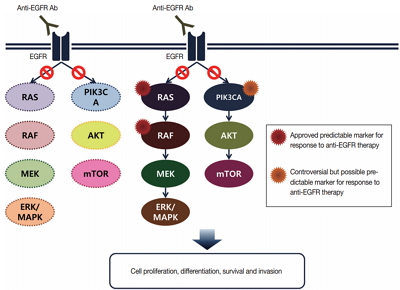
- With recent advances in molecular diagnostic methods and targeted cancer therapies, several molecular tests have been recommended for gastric cancer (GC) and colorectal cancer (CRC). Microsatellite instability analysis of gastrointestinal cancers is performed to screen for Lynch syndrome, predict favorable prognosis, and screen patients for immunotherapy. The epidermal growth factor receptor (EGFR) tyrosine kinase inhibitor has been approved in metastatic CRCs with wildtype RAS (KRAS and NRAS exon 2–4). A BRAF mutation is required for predicting poor prognosis. Additionally, amplification of human epidermal growth factor receptor 2 (HER2) and MET is also associated with resistance to EGFR inhibitor in metastatic CRC patients. The BRAF V600E mutation is found in sporadic microsatellite unstable CRCs, and thus is helpful for ruling out Lynch syndrome. In addition, the KRAS mutation is a prognostic biomarker and the PIK3CA mutation is a molecular biomarker predicting response to phosphoinositide 3-kinase/AKT/mammalian target of rapamycin inhibitors and response to aspirin therapy in CRC patients. Additionally, HER2 testing should be performed in all recurrent or metastatic GCs. If the results of HER2 immunohistochemistry are equivocal, HER2 silver or fluorescence in situ hybridization testing are essential for confirmative determination of HER2 status. Epstein-Barr virus–positive GCs have distinct characteristics, including heavy lymphoid stroma, hypermethylation phenotype, and high expression of immune modulators. Recent advances in next-generation sequencing technologies enable us to examine various genetic alterations using a single test. Pathologists play a crucial role in ensuring reliable molecular testing and they should also take an integral role between molecular laboratories and clinicians.
-
Citations
Citations to this article as recorded by- ALYREF promotes tumor progression by regulating SLC2A3-mediated glycolysis in gastric cancer
Yan Ma, Guangyue Shi, Limin Zhang, Zhanfei Lu, Rong Huang, Yao Wang, Zhengfei Zhao, Bin Ke
Genes & Diseases.2026; : 102328. CrossRef - Spatial and Temporal Tumor Heterogeneity in Gastric Cancer: Discordance of Predictive Biomarkers
Hye Seung Lee
Journal of Gastric Cancer.2025; 25(1): 192. CrossRef - Korean Practice Guidelines for Gastric Cancer 2024: An Evidence-based, Multidisciplinary Approach (Update of 2022 Guideline)
In-Ho Kim, Seung Joo Kang, Wonyoung Choi, An Na Seo, Bang Wool Eom, Beodeul Kang, Bum Jun Kim, Byung-Hoon Min, Chung Hyun Tae, Chang In Choi, Choong-kun Lee, Ho Jung An, Hwa Kyung Byun, Hyeon-Su Im, Hyung-Don Kim, Jang Ho Cho, Kyoungjune Pak, Jae-Joon Kim
Journal of Gastric Cancer.2025; 25(1): 5. CrossRef - Elucidating the Role of KRAS, NRAS, and BRAF Mutations and Microsatellite Instability in Colorectal Cancer via Next-Generation Sequencing
Marta Rada Rodríguez, Bárbara Angulo Biedma, Irene Rodríguez Pérez, Javier Azúa Romeo
Cancers.2025; 17(13): 2071. CrossRef - Chitosan and Its Derivative‐Based Nanoparticles in Gastrointestinal Cancers: Molecular Mechanisms of Action and Promising Anticancer Strategies
Zahra Shokati Eshkiki, Fatemeh Mansouri, Amir Reza Karamzadeh, Abolfazl Namazi, Hafez Heydari, Javad Akhtari, Seidamir Pasha Tabaeian, Abolfazl Akbari, Hongda Liu
Journal of Clinical Pharmacy and Therapeutics.2024;[Epub] CrossRef - Colorectal Cancer: Genetic Underpinning and Molecular Therapeutics for Precision Medicine
Gideon T. Dosunmu, Ardaman Shergill
Genes.2024; 15(5): 538. CrossRef - Effector Function Characteristics of Exhausted CD8+ T-Cell in Microsatellite Stable and Unstable Gastric Cancer
Dong-Seok Han, Yoonjin Kwak, Seungho Lee, Soo Kyung Nam, Seong-Ho Kong, Do Joong Park, Hyuk-Joon Lee, Nak-Jung Kwon, Hye Seung Lee, Han-Kwang Yang
Cancer Research and Treatment.2024; 56(4): 1146. CrossRef - A Standardized Pathology Report for Gastric Cancer: 2nd Edition
Young Soo Park, Myeong-Cherl Kook, Baek-hui Kim, Hye Seung Lee, Dong-Wook Kang, Mi-Jin Gu, Ok Ran Shin, Younghee Choi, Wonae Lee, Hyunki Kim, In Hye Song, Kyoung-Mee Kim, Hee Sung Kim, Guhyun Kang, Do Youn Park, So-Young Jin, Joon Mee Kim, Yoon Jung Choi,
Journal of Gastric Cancer.2023; 23(1): 107. CrossRef - A standardized pathology report for gastric cancer: 2nd edition
Young Soo Park, Myeong-Cherl Kook, Baek-hui Kim, Hye Seung Lee, Dong-Wook Kang, Mi-Jin Gu, Ok Ran Shin, Younghee Choi, Wonae Lee, Hyunki Kim, In Hye Song, Kyoung-Mee Kim, Hee Sung Kim, Guhyun Kang, Do Youn Park, So-Young Jin, Joon Mee Kim, Yoon Jung Choi,
Journal of Pathology and Translational Medicine.2023; 57(1): 1. CrossRef - Korean Practice Guidelines for Gastric Cancer 2022: An Evidence-based, Multidisciplinary Approach
Tae-Han Kim, In-Ho Kim, Seung Joo Kang, Miyoung Choi, Baek-Hui Kim, Bang Wool Eom, Bum Jun Kim, Byung-Hoon Min, Chang In Choi, Cheol Min Shin, Chung Hyun Tae, Chung sik Gong, Dong Jin Kim, Arthur Eung-Hyuck Cho, Eun Jeong Gong, Geum Jong Song, Hyeon-Su Im
Journal of Gastric Cancer.2023; 23(1): 3. CrossRef - Influence of location-dependent sex difference on PD-L1, MMR/MSI, and EGFR in colorectal carcinogenesis
Jina Choi, Nayoung Kim, Ryoung Hee Nam, Jin Won Kim, Chin-Hee Song, Hee Young Na, Gyeong Hoon Kang, Alvaro Galli
PLOS ONE.2023; 18(2): e0282017. CrossRef - Comprehensive Analysis of Epigenetic Associated Genes with Differential
Gene Expression and Prognosis in Gastric Cancer
Songlin An, Xinbao Li, Bing Li, Yan Li
Combinatorial Chemistry & High Throughput Screening.2023; 26(3): 527. CrossRef - Liquid Biopsy in Advanced Colorectal Cancer: Clinical Applications of Different Analytes
Marco Donatello Delcuratolo, Andrea Modrego-Sánchez, Maristella Bungaro, Beatriz Antón-Pascual, Santiago Teran, Valentina Dipace, Silvia Novello, Rocio Garcia-Carbonero, Francesco Passiglia, Cristina Graválos-Castro
Journal of Molecular Pathology.2023; 4(3): 128. CrossRef - Exosomal circ_0001190 Regulates the Progression of Gastric Cancer via miR-586/SOSTDC1 Axis
Chao Liu, Jing Yang, Fengchi Zhu, Zhiying Zhao, Lixue Gao
Biochemical Genetics.2022; 60(6): 1895. CrossRef - Optimization of pre‐analytical and analytical steps for DNA and RNA analysis of fresh cytology samples
Ana Dolinar, Gašper Grubelnik, Irena Srebotnik‐Kirbiš, Margareta Strojan Fležar, Margareta Žlajpah
Cancer Medicine.2022; 11(21): 4021. CrossRef - Retracted: Connexin 43 upregulation by dioscin‐inhibited gastric cancer metastasis by suppressing PI3K/Akt pathway
Food Science & Nutrition.2022;[Epub] CrossRef - Molecular Pathology of Gastric Cancer
Moonsik Kim, An Na Seo
Journal of Gastric Cancer.2022; 22(4): 264. CrossRef - Case report: Undifferentiated sarcoma with multiple tumors involved in Lynch syndrome: Unexpected favorable outcome to sintilimab combined with chemotherapy
Jiaying Liu, Xiaona Chang, Guixiang Xiao, Jingmin Zhong, Bo Huang, Jiwei Zhang, Beibei Gao, Gang Peng, Xiu Nie
Frontiers in Oncology.2022;[Epub] CrossRef - The SUMO E3 ligase CBX4 is identified as a poor prognostic marker of gastric cancer through multipronged OMIC analyses
Yi Pan, Qingshang Li, Zhijun Cao, Shuliang Zhao
Genes & Diseases.2021; 8(6): 827. CrossRef - Worldwide variation in lynch syndrome screening: case for universal screening in low colorectal cancer prevalence areas
George Kunnackal John, Vipin Das Villgran, Christine Caufield-Noll, Francis Giardiello
Familial Cancer.2021; 20(2): 145. CrossRef - Tamoxifen Downregulates the Expression of Notch1 and DLL1 Genes in MKN-45 Gastric Cancer Cells
Faranak Khanipouyani, Hassan Akrami
Journal of Gastrointestinal Cancer.2021; 52(3): 922. CrossRef - Kallikrein-11, in Association with Coiled-Coil Domain Containing 25, as a Potential Prognostic Marker for Cholangiocarcinoma with Lymph Node Metastasis
Saeranee Siriphak, Ravinnipa Chanakankun, Tanakorn Proungvitaya, Sittiruk Roytrakul, Doungdean Tummanatsakun, Wunchana Seubwai, Molin Wongwattanakul, Siriporn Proungvitaya
Molecules.2021; 26(11): 3105. CrossRef - ISH-based HER2 diagnostics
Josef Rüschoff, Iris Nagelmeier, Bharat Jasani, Oliver Stoss
Der Pathologe.2021; 42(S1): 62. CrossRef - Identification and Analysis of Key Genes Driving Gastric Cancer Through Bioinformatics
Zhao Liu, Shihai Liu, Jing Guo, Libin Sun, Shasha Wang, Yixuan Wang, Wensheng Qiu, Jing Lv
Genetic Testing and Molecular Biomarkers.2021; 25(1): 1. CrossRef - Microsatellite Instability in Colorectal Cancer Liquid Biopsy—Current Updates on Its Potential in Non-Invasive Detection, Prognosis and as a Predictive Marker
Francis Yew Fu Tieng, Nadiah Abu, Learn-Han Lee, Nurul-Syakima Ab Mutalib
Diagnostics.2021; 11(3): 544. CrossRef - Metformin attenuates synergic effect of diabetes mellitus and Helicobacter pylori infection on gastric cancer cells proliferation by suppressing PTEN expression
Huibin Lu, Xinwei Han, Jianzhuang Ren, Kewei Ren, Zongming Li, Quanhui Zhang
Journal of Cellular and Molecular Medicine.2021; 25(10): 4534. CrossRef - Recent Advances in the Diagnosis, Staging, Treatment, and Prognosis of Advanced Gastric Cancer: A Literature Review
Zhi-da Chen, Peng-fei Zhang, Hong-qing Xi, Bo Wei, Lin Chen, Yun Tang
Frontiers in Medicine.2021;[Epub] CrossRef - Tumor immune response and immunotherapy in gastric cancer
Yoonjin Kwak, An Na Seo, Hee Eun Lee, Hye Seung Lee
Journal of Pathology and Translational Medicine.2020; 54(1): 20. CrossRef - Comparative analysis of HER2 copy number between plasma and tissue samples in gastric cancer using droplet digital PCR
Boram Kim, Soo Kyung Nam, Soo Hyun Seo, Kyoung Un Park, Sang-Hoon Ahn, Do Joong Park, Hyung-Ho Kim, Woo Ho Kim, Hye Seung Lee
Scientific Reports.2020;[Epub] CrossRef - Differential prognostic impact of CD8+ T cells based on human leucocyte antigen I and PD-L1 expression in microsatellite-unstable gastric cancer
Yoonjin Kwak, Jiwon Koh, Yujun Park, Yun Ji Hong, Kyoung Un Park, Hyung-Ho Kim, Do Joong Park, Sang-Hoon Ahn, Woo Ho Kim, Hye Seung Lee
British Journal of Cancer.2020; 122(9): 1399. CrossRef - High-Accuracy Determination of Microsatellite Instability Compatible with Liquid Biopsies
Amanda Bortolini Silveira, François-Clément Bidard, Amélie Kasperek, Samia Melaabi, Marie-Laure Tanguy, Manuel Rodrigues, Guillaume Bataillon, Luc Cabel, Bruno Buecher, Jean-Yves Pierga, Charlotte Proudhon, Marc-Henri Stern
Clinical Chemistry.2020; 66(4): 606. CrossRef - Chitosan: A compound for drug delivery system in gastric cancer-a review
Rana Shafabakhsh, Bahman Yousefi, Zatollah Asemi, Banafsheh Nikfar, Mohammad Ali Mansournia, Jamal Hallajzadeh
Carbohydrate Polymers.2020; 242: 116403. CrossRef - MSI and EBV Positive Gastric Cancer’s Subgroups and Their Link with Novel Immunotherapy
Maria Grazia Rodriquenz, Giandomenico Roviello, Alberto D’Angelo, Daniele Lavacchi, Franco Roviello, Karol Polom
Journal of Clinical Medicine.2020; 9(5): 1427. CrossRef - Theoretical calculations of molecular descriptors for anticancer activities of 1, 2, 3-triazole-pyrimidine derivatives against gastric cancer cell line (MGC-803): DFT, QSAR and docking approaches
Rhoda Oyeladun Oyewole, Abel Kolawole Oyebamiji, Banjo Semire
Heliyon.2020; 6(5): e03926. CrossRef - Identification of a Clinical Cutoff Value for Multiplex KRASG12/G13 Mutation Detection in Colorectal Adenocarcinoma Patients Using Digital Droplet PCR, and Comparison with Sanger Sequencing and PNA Clamping Assay
Kyung Ha Lee, Tae Hee Lee, Min Kyung Choi, In Sun Kwon, Go Eun Bae, Min-Kyung Yeo
Journal of Clinical Medicine.2020; 9(7): 2283. CrossRef - PD-L1 Testing in Gastric Cancer by the Combined Positive Score of the 22C3 PharmDx and SP263 Assay with Clinically Relevant Cut-offs
Yujun Park, Jiwon Koh, Hee Young Na, Yoonjin Kwak, Keun-Wook Lee, Sang-Hoon Ahn, Do Joong Park, Hyung-Ho Kim, Hye Seung Lee
Cancer Research and Treatment.2020; 52(3): 661. CrossRef - Clinical and Molecular Assessment of Patients with Lynch Syndrome and Sarcomas Underpinning the Association with MSH2 Germline Pathogenic Variants
Nathália de Angelis de Carvalho, Bianca Naomi Niitsuma, Vanessa Nascimento Kozak, Felipe D’almeida Costa, Mariana Petaccia de Macedo, Bruna Elisa Catin Kupper, Maria Letícia Gobo Silva, Maria Nirvana Formiga, Sahlua Miguel Volc, Samuel Aguiar Junior, Eden
Cancers.2020; 12(7): 1848. CrossRef - Farnesoid X receptor antagonizes Wnt/β-catenin signaling in colorectal tumorigenesis
Junhui Yu, Shan Li, Jing Guo, Zhengshui Xu, Jianbao Zheng, Xuejun Sun
Cell Death & Disease.2020;[Epub] CrossRef - YAP promotes self-renewal of gastric cancer cells by inhibiting expression of L-PTGDS and PTGDR2
Qingli Bie, Xiaozhe Li, Shiqi Liu, Xiao Yang, Zhenwen Qian, Rou Zhao, Xiaobei Zhang, Bin Zhang
International Journal of Clinical Oncology.2020; 25(12): 2055. CrossRef - ISH-basierte HER2-Diagnostik
Josef Rüschoff, Iris Nagelmeier, Bharat Jasani, Oliver Stoss
Der Pathologe.2020; 41(6): 606. CrossRef - Histone Deacetylase Inhibitor Trichostatin A Suppresses Cell Proliferation and Induces Apoptosis by Regulating the PI3K/AKT Signalling Pathway in Gastric Cancer Cells
Xinli An, Zekun Wei, Botian Ran, Hao Tian, Hongyu Gu, Yan Liu, Hongjuan Cui, Shunqin Zhu
Anti-Cancer Agents in Medicinal Chemistry.2020; 20(17): 2114. CrossRef - Role of Her-2 in Gastrointestinal Tumours beyond Gastric Cancer: A Tool for Precision Medicine
Csongor G. Lengyel, Baker Habeeb, Shah Z. Khan, Khalid El Bairi, Sara C. Altuna, Sadaqat Hussain, Syed Ayub Mazher, Dario Trapani, Angelica Petrillo
Gastrointestinal Disorders.2020; 3(1): 1. CrossRef - Next-generation Sequencing in the Management of Gastric and Esophageal Cancers
Jill C. Rubinstein, Norman G. Nicolson, Nita Ahuja
Surgical Clinics of North America.2019; 99(3): 511. CrossRef - Molecular profile in Paraguayan colorectal cancer patients, towards to a precision medicine strategy
Tania Fleitas-Kanonnikoff, Carolina Martinez‐Ciarpaglini, Josefina Ayala, Cinthia Gauna, Rita Denis, Ita Yoffe, Silvia Sforza, María Teresa Martínez, Alicia Pomata, Maider Ibarrola‐Villava, Sipan Arevshatyan, Verónica Burriel, Diego Boscá, Oscar Pastor, A
Cancer Medicine.2019; 8(6): 3120. CrossRef - Human epidermal growth factor receptor 2-positive digestive tumors
Anna D. Wagner, Berna C. Özdemir, Josef Rüschoff
Current Opinion in Oncology.2019; 31(4): 354. CrossRef - Assessing molecular subtypes of gastric cancer: microsatellite unstable and Epstein-Barr virus subtypes. Methods for detection and clinical and pathological implications
Carolina Martinez-Ciarpaglini, Tania Fleitas-Kanonnikoff, Valentina Gambardella, Marta Llorca, Cristina Mongort, Regina Mengual, Gema Nieto, Lara Navarro, Marisol Huerta, Susana Rosello, Desamparados Roda, Noelia Tarazona, Samuel Navarro, Gloria Ribas, An
ESMO Open.2019; 4(3): e000470. CrossRef - Current and future molecular diagnostics of gastric cancer
Rachel Sin-Yu Choi, Wing Yin Xenia Lai, Lok Ting Claire Lee, Wing Lam Christa Wong, Xiao Meng Pei, Hin Fung Tsang, Joel Johnson Leung, William Chi Shing Cho, Man Kee Maggie Chu, Elaine Yue Ling Wong, Sze Chuen Cesar Wong
Expert Review of Molecular Diagnostics.2019; 19(10): 863. CrossRef - Clinicopathologic significance of human leukocyte antigen class I expression in patients with stage II and III gastric cancer
Yujun Park, Jiwon Koh, Yoonjin Kwak, Sang-Hoon Ahn, Do Joong Park, Hyung-Ho Kim, Woo Ho Kim, Hye Seung Lee
Cancer Immunology, Immunotherapy.2019; 68(11): 1779. CrossRef - Development and Validation of an Easy-to-Implement, Practical Algorithm for the Identification of Molecular Subtypes of Gastric Cancer: Prognostic and Therapeutic Implications
Jiwon Koh, Keun-Wook Lee, Soo Kyung Nam, An Na Seo, Ji-Won Kim, Jin Won Kim, Do Joong Park, Hyung-Ho Kim, Woo Ho Kim, Hye Seung Lee
The Oncologist.2019; 24(12): e1321. CrossRef - Mechanisms and Therapy for Cancer Metastasis to the Brain
Federica Franchino, Roberta Rudà, Riccardo Soffietti
Frontiers in Oncology.2018;[Epub] CrossRef - Status of programmed death-ligand 1 expression in sarcomas
Hyung Kyu Park, Mingi Kim, Minjung Sung, Seung Eun Lee, Yu Jin Kim, Yoon-La Choi
Journal of Translational Medicine.2018;[Epub] CrossRef - Design and synthesis of near-infrared fluorescence-enhancement probes for the cancer-specific enzyme hNQO1
Changyu Zhang, Bei-Bei Zhai, Tao Peng, Zelin Zhong, Lianbin Xu, Qiang-Zhe Zhang, Lu-Yuan Li, Long Yi, Zhen Xi
Dyes and Pigments.2017; 143: 245. CrossRef - Progress in the treatment of advanced gastric cancer
Zheyu Song, Yuanyu Wu, Jiebing Yang, Dingquan Yang, Xuedong Fang
Tumor Biology.2017; 39(7): 101042831771462. CrossRef - Pathologische Einteilung und Diagnostik des Ösophagus- und Magenkarzinoms
S. Förster, A. Tannapfel
Der Gastroenterologe.2017; 12(5): 394. CrossRef - NR4A1-induced increase in the sensitivity of a human gastric cancer line to TNFα-mediated apoptosis is associated with the inhibition of JNK/Parkin-dependent mitophagy
Hongzhu Yan, Feng Xiao, Jue Zou, Chengmin Qiu, Weiwei Sun, Minmin Gu, Li Zhang
International Journal of Oncology.2017;[Epub] CrossRef
- ALYREF promotes tumor progression by regulating SLC2A3-mediated glycolysis in gastric cancer
- Stromal Expression of MicroRNA-21 in Advanced Colorectal Cancer Patients with Distant Metastases
- Kyu Sang Lee, Soo Kyung Nam, Jiwon Koh, Duck-Woo Kim, Sung-Bum Kang, Gheeyoung Choe, Woo Ho Kim, Hye Seung Lee
- J Pathol Transl Med. 2016;50(4):270-277. Published online May 31, 2016
- DOI: https://doi.org/10.4132/jptm.2016.03.19
- 12,589 View
- 99 Download
- 21 Web of Science
- 17 Crossref
-
Abstract
PDF
- Background
The aim of this study was to determine the regional heterogeneity and clinicopathological significance of microRNA-21 (miR-21) in advanced colorectal cancer (CRC) patients with distant metastasis.
Methods
miR-21 expression was investigated by using locked nucleic acid– fluorescence in situ hybridization in the center and periphery of the primary cancer and in distant metastasis from 170 patients with advanced CRC. In addition, α-smooth muscle actin and desmin were evaluated to identify cancer-associated fibroblasts (CAFs) by using immunohistochemistry.
Results
The miR-21 signal was observed in the cancer stroma. The expression of miR-21 (a score of 1–4) in the center and periphery of the primary cancer and in distant metastasis was observed in specimens from 133 (78.2%), 105 (61.8%), and 91 (53.5%) patients, respectively. miR-21 expression was heterogeneous in advanced CRC. Discordance between miR-21 expression in the center of the primary cancer and either the periphery of the primary cancer or distant metastasis was 31.7% or 44.7%, respectively. miR-21 stromal expression in the periphery of the primary cancer was significantly associated with a better prognosis (p=.004). miR-21 expression was significantly associated with CAFs in the center of the primary cancer (p=.001) and distant metastases (p=.041).
Conclusions
miR-21 expression is observed in cancer stroma related to the CAF quantity and frequently presents regional heterogeneity in CRC. Our findings indicate that the role of miR-21 in predicting prognosis may be controversial but provide a new perspective of miR-21 level measurement in cancer specimens. -
Citations
Citations to this article as recorded by- Heterogeneity of primary and metastatic CAFs: From differential treatment outcomes to treatment opportunities (Review)
Zixing Kou, Cun Liu, Wenfeng Zhang, Changgang Sun, Lijuan Liu, Qiming Zhang
International Journal of Oncology.2024;[Epub] CrossRef - Expression of Selected miRNAs in Normal and Cancer-Associated Fibroblasts and in BxPc3 and MIA PaCa-2 Cell Lines of Pancreatic Ductal Adenocarcinoma
Václav Mandys, Alexey Popov, Robert Gürlich, Jan Havránek, Lucie Pfeiferová, Michal Kolář, Jana Vránová, Karel Smetana, Lukáš Lacina, Pavol Szabo
International Journal of Molecular Sciences.2023; 24(4): 3617. CrossRef - MicroRNAs and colorectal cancer: clinical potential and regulatory networks
George Yiadom Osei, Joseph Adu-Amankwaah, Selina Koomson, Solomon Beletaa, Emmanuel Akomanin Asiamah, Cecilia Smith-Togobo, Siti Razila Abdul Razak
Molecular Biology Reports.2023; 50(11): 9575. CrossRef - MicroRNA-552 expression in colorectal cancer and its clinicopathological significance
Joon Im, Soo Kyung Nam, Hye Seung Lee
Journal of Pathology and Translational Medicine.2021; 55(2): 125. CrossRef - Postoperative changes in plasma miR21‐5p as a novel biomarker for colorectal cancer recurrence: A prospective study
Masahiro Fukada, Nobuhisa Matsuhashi, Takao Takahashi, Nobuhiko Sugito, Kazuki Heishima, Kazuhiro Yoshida, Yukihiro Akao
Cancer Science.2021; 112(10): 4270. CrossRef - Differential expression of microRNAs in colorectal cancer: Different patterns between isolated cancer gland and stromal cells
Ayaka Sato, Yasuko Fujita, Koki Otsuka, Akira Sasaki, Hiromu Suzuki, Takayuki Matsumoto, Tamotsu Sugai
Pathology International.2020; 70(1): 21. CrossRef - High-Throughput Multiplex Immunohistochemical Imaging of the Tumor and Its Microenvironment
Jiwon Koh, Yoonjin Kwak, Jin Kim, Woo Ho Kim
Cancer Research and Treatment.2020; 52(1): 98. CrossRef - Tumor Tissue MIR92a and Plasma MIRs21 and 29a as Predictive Biomarkers Associated with Clinicopathological Features and Surgical Resection in a Prospective Study on Colorectal Cancer Patients
Masahiro Fukada, Nobuhisa Matsuhashi, Takao Takahashi, Nobuhiko Sugito, Kazuki Heishima, Yukihiro Akao, Kazuhiro Yoshida
Journal of Clinical Medicine.2020; 9(8): 2509. CrossRef - The promising role of noncoding RNAs in cancer-associated fibroblasts: an overview of current status and future perspectives
Zengli Fang, Jin Xu, Bo Zhang, Wei Wang, Jiang Liu, Chen Liang, Jie Hua, Qingcai Meng, Xianjun Yu, Si Shi
Journal of Hematology & Oncology.2020;[Epub] CrossRef - Altered miR-21, miRNA-148a Expression in Relation to KRAS Mutation Status as Indicator of Adenoma-Carcinoma Transitional Pattern in Colorectal Adenoma and Carcinoma Lesions
Somayeh Igder, Javad Mohammadiasl, Pooneh Mokarram
Biochemical Genetics.2019; 57(6): 767. CrossRef - Development and Validation of an Easy-to-Implement, Practical Algorithm for the Identification of Molecular Subtypes of Gastric Cancer: Prognostic and Therapeutic Implications
Jiwon Koh, Keun-Wook Lee, Soo Kyung Nam, An Na Seo, Ji-Won Kim, Jin Won Kim, Do Joong Park, Hyung-Ho Kim, Woo Ho Kim, Hye Seung Lee
The Oncologist.2019; 24(12): e1321. CrossRef - Prognostic Utility of Histological Growth Patterns of Colorectal Lung Oligometastasis
Son Jae Yeong, Min Gyoung Pak, Hyoun Wook Lee, Seung Yeon Ha, Mee Sook Roh
Journal of Pathology and Translational Medicine.2018; 52(2): 98. CrossRef - Effect of dietary components on miRNA and colorectal carcinogenesis
Adewale Oluwaseun Fadaka, Babajide A. Ojo, Olusola Bolaji Adewale, Temitope Esho, Ashley Pretorius
Cancer Cell International.2018;[Epub] CrossRef - Ligand-Independent Epidermal Growth Factor Receptor Overexpression Correlates with Poor Prognosis in Colorectal Cancer
Sumi Yun, Yoonjin Kwak, Soo Kyung Nam, An Na Seo, Heung-Kwon Oh, Duck-Woo Kim, Sung-Bum Kang, Hye Seung Lee
Cancer Research and Treatment.2018; 50(4): 1351. CrossRef - Mutation analysis of CTNNB1 gene and the ras pathway genes KRAS , NRAS , BRAF , and PIK3CA in eyelid sebaceous carcinomas
Mi Jung Kwon, Eun Sook Nam, Seong Jin Cho, Hye-Rim Park, Soo Kee Min, Jinwon Seo, Ji-Young Choe
Pathology - Research and Practice.2017; 213(6): 654. CrossRef - Exosomal miRNAs and miRNA dysregulation in cancer-associated fibroblasts
Fengming Yang, Zhiqiang Ning, Ling Ma, Weitao Liu, Chuchu Shao, Yongqian Shu, Hua Shen
Molecular Cancer.2017;[Epub] CrossRef - Clinicopathologic implications of immune classification by PD-L1 expression and CD8-positive tumor-infiltrating lymphocytes in stage II and III gastric cancer patients
Jiwon Koh, Chan-Young Ock, Jin Won Kim, Soo Kyung Nam, Yoonjin Kwak, Sumi Yun, Sang-Hoon Ahn, Do Joong Park, Hyung-Ho Kim, Woo Ho Kim, Hye Seung Lee
Oncotarget.2017; 8(16): 26356. CrossRef
- Heterogeneity of primary and metastatic CAFs: From differential treatment outcomes to treatment opportunities (Review)
- Analysis of Surgical Pathology Data in the HIRA Database: Emphasis on Current Status and Endoscopic Submucosal Dissection Specimens
- Sun-ju Byeon, Woo Ho Kim
- J Pathol Transl Med. 2016;50(3):204-210. Published online April 4, 2016
- DOI: https://doi.org/10.4132/jptm.2016.03.04
- 11,571 View
- 73 Download
- 4 Web of Science
- 3 Crossref
-
Abstract
PDF
- Background
In Korea, medical institutions make claims for insurance reimbursement to the Health Insurance Review and Assessment Service (HIRA). Thus, HIRA databases reflect the general medical services that are provided in Korea. We conducted two pathology-related studies using a HIRA national patient sample (NPS) data (selection probability, 0.03). First, we evaluated the current status of general pathologic examination in Korea. Second, we evaluated pathologic issues associated with endoscopic submucosal dissection (ESD).
Methods
The sample data used in this study was HIRA-NPS-2013-0094.
Results
In the NPS dataset, 163,372 pathologic examinations were performed in 103,528 patients during the year 2013. Considering sampling weight (33.3), it is estimated that 5,440,288 (163,372 × 33.3) pathologic examinations were performed. Internal medicine and general surgery were the most common departments requesting pathologic examinations. The region performing pathologic examinations were different according to type of medical institution. In total, 490 patients underwent ESD, and 43.4% (213/490) underwent ESD due to gastric carcinoma. The results of the ESD led to a change in disease code for 10.5% (29/277) of non-gastric carcinoma patients. In addition, 21 patients (4.3%) underwent surgery following the ESD. The average period between ESD and surgery was 44 days.
Conclusions
HIRA sample data provide the nation-wide landscape of specific procedure. However, in order to reduce the statistical error, further studies using entire HIRA data are needed. -
Citations
Citations to this article as recorded by- Impact of the COVID-19 Pandemic on Esophagogastroduodenoscopy and Gastric Cancer Claims in South Korea: A Nationwide, Population-Based Study
Min Ah Suh, Su Bee Park, Min Seob Kwak, Jin Young Yoon, Jae Myung Cha
Yonsei Medical Journal.2023; 64(9): 549. CrossRef - Using big data to see the forest and the trees: endoscopic submucosal dissection of early gastric cancer in Korea
Chang Seok Bang, Gwang Ho Baik
The Korean Journal of Internal Medicine.2019; 34(4): 772. CrossRef - Current Status of Pathologic Examinations in Korea, 2011–2015, Based on the Health Insurance Review and Assessment Service Dataset
Sun-ju Byeon
Journal of Pathology and Translational Medicine.2017; 51(2): 137. CrossRef
- Impact of the COVID-19 Pandemic on Esophagogastroduodenoscopy and Gastric Cancer Claims in South Korea: A Nationwide, Population-Based Study
- Proposal for a Standardized Pathology Report of Gastroenteropancreatic Neuroendocrine Tumors: Prognostic Significance of Pathological Parameters
- Mee-Yon Cho, Jin Hee Sohn, So Young Jin, Hyunki Kim, Eun Sun Jung, Mi-Jung Kim, Kyoung-Mee Kim, Woo Ho Kim, Joon Mee Kim, Yun Kyung Kang, Joon Hyuk Choi, Dae Young Kang, Youn Wha Kim, Eun Hee Choi
- Korean J Pathol. 2013;47(3):227-237. Published online June 25, 2013
- DOI: https://doi.org/10.4132/KoreanJPathol.2013.47.3.227
- 17,262 View
- 150 Download
- 12 Crossref
-
Abstract
PDF
Background There is confusion in the diagnosis and biological behaviors of gastroenteropancreatic neuroendocrine tumors (GEP-NETs), because of independently proposed nomenclatures and classifications. A standardized form of pathology report is required for the proper management of patients.
Methods We discussed the proper pathological evaluation of GEP-NET at the consensus conference of the subcommittee meeting for the Gastrointestinal Pathology Study Group of the Korean Society of Pathologists. We then verified the prognostic significance of pathological parameters from our previous nationwide collection of pathological data from 28 hospitals in Korea to determine the essential data set for a pathology report.
Results Histological classification, grading (mitosis and/or Ki-67 labeling index), T staging (extent, size), lymph node metastasis, and lymphovascular and perineural invasion were significant prognostic factors and essential for the pathology report of GEP-NET, while immunostaining such as synaptophysin and chromogranin may be optional. Furthermore, the staging system, either that of the 2010 American Joint Cancer Committee (AJCC) or the European Neuroendocrine Tumor Society (ENETS), should be specified, especially for pancreatic neuroendocrine neoplasms.
Conclusions A standardized pathology report is crucial for the proper management and prediction of prognosis of patients with GEP-NET.
-
Citations
Citations to this article as recorded by- Analysis of Prognostic Risk Factors of Endoscopic Submucosal Dissection (ESD) and Curative Resection of Gastrointestinal Neuroendocrine Neoplasms
Yuan Si, ChaoKang Huang, JingBin Yuan, XianHui Zhang, QingQiang He, ZhiJin Lin, Ling He, ZhongXin Liu, Yuvaraja Teekaraman
Contrast Media & Molecular Imaging.2022;[Epub] CrossRef - Standardization of the pathologic diagnosis of appendiceal mucinous neoplasms
Dong-Wook Kang, Baek-hui Kim, Joon Mee Kim, Jihun Kim, Hee Jin Chang, Mee Soo Chang, Jin-Hee Sohn, Mee-Yon Cho, So-Young Jin, Hee Kyung Chang, Hye Seung Han, Jung Yeon Kim, Hee Sung Kim, Do Youn Park, Ha Young Park, So Jeong Lee, Wonae Lee, Hye Seung Lee,
Journal of Pathology and Translational Medicine.2021; 55(4): 247. CrossRef - Preoperative diagnosis of well‐differentiated neuroendocrine tumor in common hepatic duct by brush cytology: A case report
Jiwoon Choi, Kyong Joo Lee, Sung Hoon Kim, Mee‐Yon Cho
Diagnostic Cytopathology.2019; 47(7): 720. CrossRef - Primary renal well-differentiated neuroendocrine tumors: report of six cases with an emphasis on the Ki-67 index and mitosis
Bohyun Kim, Han-Seong Kim, Kyung Chul Moon
Diagnostic Pathology.2019;[Epub] CrossRef - Primary low‐grade neuroendocrine carcinoma of the skin: An exceedingly rare entity
Tiffany Y. Chen, Annie O. Morrison, Joe Susa, Clay J. Cockerell
Journal of Cutaneous Pathology.2017; 44(11): 978. CrossRef - Prognostic Validity of the American Joint Committee on Cancer and the European Neuroendocrine Tumors Staging Classifications for Pancreatic Neuroendocrine Tumors
Jae Hee Cho, Ji Kon Ryu, Si Young Song, Jin-Hyeok Hwang, Dong Ki Lee, Sang Myung Woo, Young-Eun Joo, Seok Jeong, Seung-Ok Lee, Byung Kyu Park, Young Koog Cheon, Jimin Han, Tae Nyeun Kim, Jun Kyu Lee, Sung-Hoon Moon, Hyunjin Kim, Eun Taek Park, Jae Chul Hw
Pancreas.2016; 45(7): 941. CrossRef - Early diagnosis and treatment of gastrointestinal neuroendocrine tumors
Hong Shen, Zhuo Yu, Jing Zhao, Xiu-Zhen Li, Wen-Sheng Pan
Oncology Letters.2016; 12(5): 3385. CrossRef - Recent Updates on Neuroendocrine Tumors From the Gastrointestinal and Pancreatobiliary Tracts
Joo Young Kim, Seung-Mo Hong
Archives of Pathology & Laboratory Medicine.2016; 140(5): 437. CrossRef - Pancreatic neuroendocrine tumors: Correlation between the contrast-enhanced computed tomography features and the pathological tumor grade
Koji Takumi, Yoshihiko Fukukura, Michiyo Higashi, Junnichi Ideue, Tomokazu Umanodan, Hiroto Hakamada, Ichiro Kanetsuki, Takashi Yoshiura
European Journal of Radiology.2015; 84(8): 1436. CrossRef - Tumeurs neuroendocrines du tube digestif et du pancréas : ce que le pathologiste doit savoir et doit faire en 2014
Jean-Yves Scoazec, Anne Couvelard
Annales de Pathologie.2014; 34(1): 40. CrossRef - Spectrum of Gastroenteropancreatic NENs in Routine Histological Examinations of Bioptic and Surgical Specimen: A Study of 161 Cases Collected from 17 Departments of Pathology in the Czech Republic
Václav Mandys, Tomáš Jirásek
Gastroenterology Research and Practice.2014; 2014: 1. CrossRef - p27 Loss Is Associated with Poor Prognosis in Gastroenteropancreatic Neuroendocrine Tumors
Hee Sung Kim, Hye Seung Lee, Kyung Han Nam, Jiwoon Choi, Woo Ho Kim
Cancer Research and Treatment.2014; 46(4): 383. CrossRef
- Analysis of Prognostic Risk Factors of Endoscopic Submucosal Dissection (ESD) and Curative Resection of Gastrointestinal Neuroendocrine Neoplasms
- Markers for Screening Lynch Syndrome Are Reliable and Useful for Identifying the Specimen Mislabeling
- Sun-ju Byeon, Jiwoon Choi, Kyung Han Nam, Bo-Gun Jang, Hee Eun Lee, Min A Kim, Woo Ho Kim
- Korean J Pathol. 2012;46(2):131-136. Published online April 25, 2012
- DOI: https://doi.org/10.4132/KoreanJPathol.2012.46.2.131
- 10,361 View
- 71 Download
- 2 Crossref
-
Abstract
PDF
Background During specimen processing in surgical pathology laboratories, specimen-related adverse events (SRAEs), such as mislabeling and specimen mixed-up might occur. In these situations, molecular techniques using short tandem repeat (STR) loci are required to identify the personal identity. Microsatellite instability (MSI) test is widely used for screening the hereditary non-polyposis colon cancer (Lynch syndrome) in surgical pathologies using polymorphic STR markers. We tried to evaluate the applicability of the MSI test for SRAEs.
Methods We obtained 253 MSI test results to analyze the allele frequencies. After calibrating the estimated nucleotide lengths, we calculated the allele frequencies, a random match probability, and a likelihood ratio (LR) of three dinucleotide STR markers (D5S349, D17S250, and D2S123).
Results The distribution of LR was 136.38 to 5,606,213.10. There was no case of LR<100. In addition, there were 153 cases (60.5%) of LR ranging from 100 to 10,000 and 100 cases (39.5%) of LR>10,000. Furthermore, the combined probability of identity was 9.23×10⁻⁴ and the combined power of exclusion was 0.99908.
Conclusions Using the three STR markers that are recommended for MSI test, all the cases were positively identified in 1% range and about one-third cases showed high LR (>10,000). These results showed that MSI tests are useful to screen the personal identity in case of SRAE in pathology laboratories.
-
Citations
Citations to this article as recorded by- Lost, mislabeled, and mishandled surgical and clinical pathology specimens: A systematic review of published literature
Heather J Carmack, Braidyn S Lazenby, Kylie J Wilson, Jamie N Bakkum-Gamez, Leslie Carranza
American Journal of Clinical Pathology.2024; 162(4): 349. CrossRef - Sensitivity and polymorphism of Bethesda panel markers in Chinese population
Yanying Zheng, Jie Chen, Xiang Zhang, Ling Xie, Yifen Zhang, Yi Sun
Bulletin du Cancer.2020; 107(11): 1091. CrossRef
- Lost, mislabeled, and mishandled surgical and clinical pathology specimens: A systematic review of published literature
- Mucinous Tubular and Spindle Cell Carcinoma of the Kidney: Touch Imprint Cytologic and Histologic Findings: A Case Report.
- Woo Ho Kim, Yong Il Kim, Seong Hoe Park, Jae Gahb Park
- J Pathol Transl Med. 2008;19(2):194-199.
- DOI: https://doi.org/10.3338/kjc.2008.19.2.194
- 3,525 View
- 16 Download
- 1 Crossref
-
Abstract
PDF
- The recent WHO classification has recognized mucinous tubular and spindle cell carcinoma (MTSCC) as a distinct entity of renal cell carcinoma, exhibiting a mixed pattern of tubules and a surrounding spindle cell proliferation within a myxoid stroma, with low-grade nuclear features. A 51-year-old woman had an incidentally discovered renal mass. Radiologic examination revealed a large, well defined mass in the lower pole of the right kidney; a right radical nephrectomy was performed. Imprint cytologic smears from fresh surgical specimens showed cellular, cohesive clusters with thick, broad trabecular arrangements and branching structures. On high power fields, the tumor was composed of round-to-oval low-grade nuclei with vesicular chromatin and small nucleoli. The tumor cells had indistinct borders and pale, eosinophilic cytoplasm. In some areas, round-to-elongated tubular structures and spindle cell patterns were noted. Chronic inflammatory cell infiltration was noted, along with a mucinous background and occasional psammoma bodies. Neither significant cytologic atypia nor mitosis was seen.
-
Citations
Citations to this article as recorded by- Mucinous Tubular and Spindle Cell Carcinoma of the Kidney with Aggressive Behavior: An Unusual Renal Epithelial Neoplasm - A Case Report -
Ji-Hye Lee, Mee-Hye Oh, Hyun Deuk Cho, Young-Sik Kim
The Korean Journal of Pathology.2010; 44(2): 211. CrossRef
- Mucinous Tubular and Spindle Cell Carcinoma of the Kidney with Aggressive Behavior: An Unusual Renal Epithelial Neoplasm - A Case Report -
- Improved Technique of Digoxigenin Labeled RNA in situ Hybridization.
- Suk Keun Lee, Yeon Sook Kim, In Sun Song, Sang Shin Lee, Young Jun Lee, Woo Ho Kim, Je Geun Chi
- Korean J Pathol. 2001;35(2):98-110.
- 2,448 View
- 17 Download
-
Abstract
PDF
- BACKGROUND
A practical RNA in situ hybridization method using digoxigenin labeled RNA probes is described in order to evaluate the technical difficulties and problems in RNA in situ hybridization.
METHODS
The paraffin sections, routinely processed in the Pathology Laboratory, were tested for the possibility of RNA in situ hybridization instead of the RNase free paraffin sections, fixed in 4% paraformaldehyde and prepared using RNase protection procedures.
RESULTS
Most of the paraffin sections, fixed in 10% neutral formalin solution in fresh condition, showed relatively good reaction of RNA in situ hybridization, although the necrotic tissue and autopsy specimens showed poor reaction of RNA in situ hybridization. A refixation procedure using a 4% paraformaldehyde solution was evaluated for optimal expression of mRNA in the paraffin sections.
CONCLUSION
The treatment of 4% paraformaldehyde before the treatment of proteinase K showed better in situ hybridization than did the treatment of 4% paraformaldehyde after the treatment of proteinase K. Also a new Polymerase Chain Reaction (PCR)-based method of RNA probe production showed consistently good results.
- Microsatellite Instability in Colorectal Carcinomas.
- Hee Jeong Cha, Dong Kyun Woo, Sun Hee Kim, Yong ll Kim, Jae Gahb Park, Woo Ho Kim
- Korean J Pathol. 2001;35(2):111-114.
- 2,509 View
- 13 Download
-
Abstract
PDF
- BACKGROUND
Microsatellite instability (MSI), which is caused by a deficient mismatch repair system, is seen in most of the hereditary non-polyposis colon cancers and a portion of sporadic colorectal cancers.
METHODS
Two hundreds forty-six consecutive sporadic colorectal cancer patients were analyzed for MSI using an ABI 377 automatic sequencer and fluorescent dye-labelled primers (BAT-25 and BAT-26).
RESULTS
The overall incidence of MSI in studied cases was 9.8% (24/246). This incidence is lower than most of the reported incidences in western countries. The incidence of MSI tumors in the proximal colon was 29.6%, while that of the distal colon was only 4.2% (p<0.001). MSI in sporadic colorectal cancers was more prevalent in poorly differentiated adenocarcinoma. In contrast to western countries, mucinous carcinoma did not show higher incidence of MSI.
CONCLUSION
The results suggest that MSI frequently occurs in cancers of the proximal colon and in tumors with poorly differentiated histology.
- Pathological Analysis of 15 Cases of Phyllodes Tumors of the Breast.
- Sung Nam Kim, Woo Ho Kim, Sang Kook Lee
- Korean J Pathol. 1993;27(1):19-26.
- 2,662 View
- 15 Download
-
Abstract
PDF
- Retrospective clinicopathologic analysis of 15 patients with the phyllodes tumors(PT) of the breast, diagnosed at SNUH over 6 years period, was done. By light microscopy, 8 cases were diagnosed as benign, and 7 cases were diagnosed as malignant. Mean ages o the patients were 37 and 34 years in malignant and benign, respectively. Most of those cases were presented with a palpable mass of the breast. None of the patients with malignant PT had distant metastasis, Local recurrences were experienced in 3 patients among the malignant PT, and one patient among the benign PT. One of 7 malignant PT was coexisted with simultaneous ipsilateral infiltrating duct carcinoma. The clinical course was not well correlated with pathologic features. The prognostic significances of several histopathologic parameters were assessed for possible correlation with local recurrence, metastasis and death; stromal cellularity, stromal cellular atypism, mitotic activity, tumor contour, necrosis, tumor size and heterologous stromal elements. Immunohistochemistry using antibody to vimentin, proliferating cell nuclear antigen(PCNA) and epidermal growth factor receptor(EGF-R) were analysed. In the 5 cases of benign PT, the stromal cells stained diffusely positive for vimentin and 3 cases of malignant tumors show similar staining for vimentin. The percentage of PCNA-positive cells were higher in the malignant PT than in the benign ones; they were 3.5% to 60% in malignancy, while they were less than 60% in all benign PT. The results of EGF-R staining were correlated with the histologic classification; only 2 cases out of 8 benign PT show diffusely positive staining of EGF-R in the cytoplasm, but 6 cases out of 7 malignant PT show positive findings.
- Computerization of Surgical Pathology Reporting and Data Storage by Automatic Coding System using Personal Computer.
- Woo Ho Kim, Jeong Wook Seo, Yong Il Kim
- Korean J Pathol. 1989;23(4):410-415.
- 2,228 View
- 14 Download
-
Abstract
PDF
- The authors developed a computer program for use in report printing as well as data storage and retrieval system at the surgical pathology and its efficacy was evaluated at the Department of Pathology, Seoul National University Hospital. This program used IBM PC XT and was written in DBASE III plus language. The main features of the program included an automatic coding and decoding of the diagnosis, automatic searching of the previous biopsy during gross dictation, powerful word processing function and flexibility of the program. The data storage was carried out during the typewriting of the report, so that the typist's workload became markedly reduced. Two kinds of data files wer stored in the hard disk ; the temporary file contained full informations and the permanent file contained the core data only. Searching of a specific case was performed by pathology accession number, chart number, patient's name or by SNOMED code within a second. All the cases were arranged by copied to the diskette during the daily service automatically, with which data were easily restored in case of hard disk failure. The advantages of this program using a persosnal computer were discussed with comparison to those of larger computer system. Based on the experience of 8 months usage in Seoul National University, we assume that this program gives a sufficient solution to the surgical pathology service of many institutes where a large computer system with well designed software is not available yet.
- Grading System for Gastric Epithelial Proliferative Diseases Standardized Guidelines proposed by Korean Study Group for Pathology of Digestive Diseases.
- Hoguen Kim, So Young Jin, Ja June Jang, Woo Ho Kim, Sang Yong Song, Kyu Rae Kim, Eun Sil Yu, Hyung Sik Shin, Han Kyeom Kim, Jin Hee Sohn, Eun Kyung Hong, Youn Wha Kim, Jin Sook Jeong, Chang Jin Kim, Shin Eun Choi, In Suh Park, Chan Il Park, Yong Il Kim
- Korean J Pathol. 1997;31(5):389-400.
- 2,543 View
- 45 Download
-
Abstract
PDF
- The assessment of epithelial changes in gastric mucosal biopsies has been one of the major problems caused by inconsistencies in and disagreements about nomenclature and interpretation. To resolve these issues, members of the Study Group for Pathology of Digestive Diseases reviewed microslides of 50 gastric lesions showing varying degrees of mucosal abnormality and reached the following consensus; 1) the proliferating gastric epithelium can be divided into hyperplastic and neoplastic; 2) the term "dysplasia" is reserved for the microscopic epithelial changes that are unequivocally neoplastic; 3) Biopsy specimens can be categorized as regenerative(negative for dysplasia), indefinite(questionable dysplasia), positive(positive for dysplasia) and overt carcinoma; 4) The positive category can be divided into two subgroups, high grade dysplasia and low grade dysplasia. Criteria for each grade are presented and discussed. We offer these guidelines for establishing the correct diagnosis of the gastric mucosal biopsy specimens and for prospective studies.
- Primary Squamous Cell and Adenosquamous Carcinomas of the Stomach: Clinico-pathologic analysis of 6 cases.
- Eun Hee Suh, Woo Ho Kim, Yong Il Kim
- Korean J Pathol. 1986;20(1):60-70.
- 2,438 View
- 13 Download
-
Abstract
PDF
- Squamous cell carcinomas and adenosquamous carcinomas are rarely originated from the stomach, thus the limited and sporadic informations about their clinico-pathologic characteristics as well as histogenesis have been elucidated. Six cases of primary squamous cell carcinoma (3 cases) and adenosquamous carcinoma(3 cases) in the stomach were examined during a period of 4 years from 1981 to 1984. After pertinent review of both clinical data and morphology through extended histotopographic study performed on 4 cases, their clinicopathologic characteristics were described. Male to female sex ratio was 4 : 2 and average age was 58.6 years. Clinical presentations or physical findings were not different from those of adenocarcinoma. Tumor masses of all cases were located in the body or phloric antrum. In all cases except for the early gastric carcinoma, each tumor was larger than 8 cm in long axis, and showed expansile and intraluminal endophytic growing tendencies with sharp margin. Simple Borrmann's macroscopic classification was applicable to none of 6 cases because of irregular and multicentric ulceration pattern and occasional submucosal growth which were reminiscent of those in submucosal tumors such as malignant lymphoma and leiomyosarcoma. Virtually four out of all six cases were diagnosed as submucosal tumor at the time of radiological examination. Microscopically three cases were composed of pure squamous cell carcinoma and remaining three contained both adeno and squamous components. Metastatic regional lymph nodes revealed only squamous element in case of pure squamous cell carcinoam, while both components were identified in adenosquamous carcinomas. Surrounding non-tumors mucosa exhibited moderate to severe degree of intestinal metaplasia accompanied by multifocal mucin pool formation. Growth pattern and surrounding mucosal changes as with older age prevalence of these tumors might express the biological behavior of intestinal type of gastric carcinoma.
- Gastroduodenal Adenomas and Carcinoma in Patients with Familial Polyposis Coli.
- Seung Sook Lee, Woo Ho Kim, Yong Il Kim
- Korean J Pathol. 1993;27(3):263-267.
- 2,327 View
- 20 Download
-
Abstract
PDF
- Gastric lesion in familial polyposis coli is commonly presented with fundic gland hyperplastic polyps, but duodenal and gastric adenomas together with their carcinomatous transformation have been rarely described in familial polyposis coli mostly by case reports. We present three cases of gastric adenomas in familial polyposis coli with one in synchronous development of gastric adenocarcinoma in Korea. All three cases had the family history related to familial polyosis coli and received proctocolectomy because of synchronous development of colonic adenocarcinoma. One patient developed gastric polyposis and adenocarcinoma 8 years after colectomy, and the remaining two presented with multiple polyps either in the stomach or duodenum synchronously at the time of the diagnosis of familial polyposis coli with colonic adenocarcinoma. None disclosed any evidence of Gardner's syndrome. We conclude that association of gastric adenomas in familial oplyposis coli is not uncommon and gastric adenoma-carcinoma sequence is an another important participating mechanism to understand the histogenesis of gastric carcinoma in Korea.
- Microsatellite Instability and Mismatch Repair Protein (hMLH1, hMSH2) Expression in Intrahepatic Cholangiocarcinoma.
- Yun Kyung Kang, Woo Ho Kim
- Korean J Pathol. 2005;39(1):9-14.
- 3,050 View
- 43 Download
-
Abstract
PDF
- BACKGROUND
To clarify the role of the mismatch repair (MMR) system in the carcinogenesis of intrahepatic cholangiocarcinoma (ICC), we investigated the microsatellite instability (MSI) status and MMR protein expression in ICC.
METHODS
Thirty-six cases of ICCs were examined by microsatellite analysis for 55 markers that encompassed all of the chromosomal arms and BAT26. An immunohistochemical study for hMLH1 and hMSH2 was also performed.
RESULTS
Widespread MSI (MSI-H) accompanied with a loss of hMLH1 expression was found in one case (2.8%). This MSI-H case was an adenosquamous carcinoma showing intraductal tubulopapillary adenocarcinoma and invasive adenosquamous carcinoma component. Loss of hMLH1 was noted in both components while the frequency and shifted band patterns of MSI were not identical between the components. Another 10 ICCs (27.8%) revealed low level MSI with preserved MMR gene expression.
CONCLUSIONS
Our data suggested that a genetic defect in the MMR system and MSI is not a major pathway in the carcinogenesis of ICC.
- Immunohistopathologic Changes in Experimental Allergic Encephalomyelitis.
- Woo Ho Kim, Je G Chi, Sang Kook Lee
- Korean J Pathol. 1986;20(3):277-287.
- 2,177 View
- 10 Download
-
Abstract
PDF
- Experimental allergic encephalomyelitis (EAE) has been a well established animal model of postvaccinatal demyelinating diseases occurring in humans. Therefore elucidation of its pathogenesis would be very critical for the understanding of various human demyelinating diseases including multiple sclerosis. This study was performed to characterize the infiltrating cells in inflammatory sites and analyze the nature of the damage of blood brain barrier in experimental allergic encephalomyelitis. Experimental allergic encephalomyelitis was produced by administering homologous spinal cord homogenate together with complete Freund's adjuvant in guinea pigs. Immunostainings on guinea pig IgG, IgM, IgA and muramidase were performed by peroxidase-antiperoxidase or indirect immunofluorescent methods. The blood-brain barrier change was assessed by administering fluorescent Evans blue. Following results were made. In juvenile animals, both clinical findings and histopathologic changes were first noted by 3 weeks after injection and progressed during the whole experimental period. However, these findings were delayed in onset and low in incidence in adult animals. The clinical and pathologic changes started from the caudal portions and extended rostrally. The blood-brain barrier (BBB) was damaged and progressed starting also from the caudal portion of the spinal cord. The BBB changes were more severe in young animal than adult animals. Those changes preceded th histologic alterations. It is suggested that the BBB susceptibility is responsible for the caudal onset of histologic changes. Although the lesion has been thought to be induced by T-cell mediated hypersensitivity, infiltrating cells consisted mainly of muramidase positive histiocytes. A few immunoglobulin positive B cells or plasma cells could also be demonstrated in the lesion. The former usually infiltrated the parenchyme and the latter remained around the small or medium-sized vessels.
- A Standardized Pathology Report for Gastric Cancer.
- Woo Ho Kim, Cheol Keun Park, Young Bae Kim, Youn Wha Kim, Ho Guen Kim, Han Ik Bae, Kyu Sang Song, Hee Kyung Chang, Hee Jin Chang, Yang Seok Chae
- Korean J Pathol. 2005;39(2):106-113.
- 5,398 View
- 345 Download
-
Abstract
PDF
- BACKGROUND
AND METHODS: The Gastrointestinal Pathology Study Group of the Korean Society of Pathologists developed a standardized pathology reporting format for gastric cancer in collaboration with the Korean Gastric Cancer Association. RESULTS: The diagnostic parameters are divided into two part: the standard part and the optional part. The standard part contains most of the items listed in the Japanese classification, the TNM classification by UICC, the WHO classification, and the Korean Gastric Cancer Association classification. Therefore, the standard part is adequate for routine surgical pathology service. We included detailed descriptions on each item.
CONCLUSIONS
The authors anticipate that this standardization can improve the diagnostic accuracy and decrease the discrepancies that occur in the pathologic diagnosis of gastric cancer. Furthermore, the standard format can encourage large scale multi-institutional collaborative studies.
- Computerization of 100,000 cases of Surgical Pathology Data at SNUH by Automatic Coding System using Personal Computer.
- Woo Ho Kim, Ghee Young Choe, Jeong Wook Seo, Yong Il Kim
- Korean J Pathol. 1990;24(4):509-512.
- 2,242 View
- 21 Download
-
Abstract
PDF
- A computer program using automatic coding of the diagnosis has been used for report printing as well as data storage and retrieval system at the Department of Pathology, Seoul National University Hospital. Previous surgical pathology files were also computerized by the automatic coding system using personal computer, and 100,000 cases of surgical pathology data during 7 years were computerized at present. The cpmputerized surgical files were counted and listed according to topograph and morphologic diagnosis. It is available to print out the list of a specific diagnosis or to copy the records to a floppy diskette. Collection of cases in surgical pathology files using cpmputerized automatic coding system becomes much convenient and accurate than using stored file cards or log books. In addition, previous biopsy records of the patient are automatically searched during the routine work so that understanding of a patient as a whole is possible through the informations about previous pathologic diagnosis. We confirm that automatic coding methods is the most practical and economic method for computerization of the surgical pathology records.
- Squamous Metaplasia in Tubular Adenoma of Sigmoid Colon: A case report.
- Soo Min Kang, Weon Seo Park, Woo Ho Kim, Yong Il Kim
- Korean J Pathol. 1993;27(6):663-665.
- 6,078 View
- 177 Download
-
Abstract
PDF
- The occurrence of squamous metaplasia(morule) in colorectal mucosa and adenocarcinoma, althrough rare, has been well documented. In contrast, very little mention has been given to mature squamous cells seen in colorectal polyps or adenomas. A 42-year-old woman presented with a 2-month history of diarrhea and melena. Proctosigmoidoscopy revealed a 4 cm-sized polypoid tumor 20 cm above the anal verge. Colonoscopic biopsy showed tubular adenoma, and a segmental resection of sigmoid colon was done. Microscopically, the tumor was c classical tubular adenoma containing multiple solid nests of squamous cells scattered only in the neoplasm; the squamous nests were generally small, and some showed direct continuity with adenomatous glands. The squamous cells were keratinizing and had regular nuclei with no mitotic activity. The importance of this phenomenon lies in its pathologic recognition, and the findings suggest that awareness of this rare occurrence in colorectal polyps should avert such overdiagnosis, and consequently prevents unnecessary radical surgery.
- Gastrointestinal Cytomegalovirus Infection: A clinicopathologic analysis of 8 cases.
- Yun Kyung Kang, Sang Yong Song, Woo Ho Kim, Yong Il Kim
- Korean J Pathol. 1994;28(1):22-29.
- 2,253 View
- 17 Download
-
Abstract
PDF
- We analysed 8 cases of gastrointestinal cytomegalovirus(CMV) infection including one autopsy, three surgically resected and four endoscopic biopsy cases. Involved sites were colon in four,stomach in three and small intestine in one. Three of them were associated with immu-nosuppressed condition but others had no clinical evidence of immune deficiency. Multiple aphthous mucosal ulceration was a common presentation, but one revealed a mucosal ulcer with segmental narrowing and thickening of wall. Microscopically, six showed cytomegalic inclusions in endothelial cells and fibroblasts, one in mucosal epithelial cells and the remaining one in both endothelial cells and mucosal epithelial cells. Immunohistochemical staining using monoclonal antibody against CMV confirmed postive result in seven cases. Serum IgM anti-CMV antibody was elevated in one case. We conclude that gastrointestinal CMV infection is currently not a rare condition and frequently associated with non-immunosuppressed condition, and thus a thorough histologic examination is required especially in the gastrointestinal ulcerative lesion. Once cytomegalic inclusion is suspected, immunohistochemical identification of CMV seems essential for specific diagnosis.
- Primary Linitis Plastica of the Rectum: A Clinico-Pathologic Analysis of Five Cases with Special Reference to Comparison with Gastric Form.
- Mee Soo Chang, Yong Il Kim, Woo Ho Kim, In Ae Park
- Korean J Pathol. 1991;25(2):114-122.
- 2,951 View
- 45 Download
-
Abstract
PDF
- Colorectal cancer can have a gross appearance similar to linitis plastica of the stomach. However, most of these cases are not primary colorectal lesions but are, indeed, metastases from other sites. This study was designed to answer the following questions; (1) Why is the linitis plastica of the large intestine so rare compared to that of te stomach? (2) Which part of the large intestine is predominantly affected by linitis plastical form? (3) Is the histogenesis of linitis plastica involving the lagre intestine similar to that involving the stomach? Of the 911 cases of the resected colorectal primary cancer, we found only 4 cases of primary linitis plastica of the intestine (0.4%) and another one case referred from other hospital. All involved the rectum; they were of encircling carcinoma with diffuse transmural infiltration of signet ring cell carcinoma accompanied by marked desmoplasia as in the gastric form. Signet ring cell carcinoma of the large intestine comprised 1.8%(n=16) of the total colorectal cancer(n=911), and predominantly occurred in the rectum(n=8). There was no histologic difference between the linitis plastica in both stomach and colon in terms of desmoplastic reaction, once the tumor infiltrated into the submucosa. We conclude that rarity of signet ring cell carcinoma in the large intestine together with its predominant occurrence in the rectum can explain low incidence of primary colorectal linitis plastica and high preference in the rectum.
- Expression of Cytokeratin 7 and 20 According to The Anatomical Location of Colon Cancer and The Differential Diagnosis with Cholangiocarcinoma.
- Yoon Kyung Jeon, Sun Lee, Byoung Kwon Kim, Woo Ho Kim, Gyeong Hoon Kang
- Korean J Pathol. 2002;36(3):146-153.
- 3,819 View
- 59 Download
-
Abstract
PDF
- BACKGROUND
Colonic adenocarcinoma usually shows CK7 negativity and CK20 positivity, which helps to differentiate it from cholangiocarcinoma usually showing a reverse immunohistochemical profile. We immunohistochemically investigated the pattern of CK7 and 20 expressions according to the anatomical location of colon cancer to refine the usefulness of CK expression in differential diagnosis.
METHODS
Immunohistochemical staining was done on 90 cases of surgically resected colon cancers and 84 cases of cholangiocarcinomas.
RESULTS
When the cases of colon cancer were divided into CATD (from the cecum to the descending colon) (32), sigmoid (26), and rectum (32), the positivity of CK7 was 41%, 15% and 28%, respectively, and the negativity of CK20 was 25%, 0 and 9% (p=0.013), respectively. In sigmoid colon cancers, 22 cases (85%) exhibited CK7-/CK20+ immunophenotype. However, the percentage decreased to 63% in the rectum and 47% in CATD. The CK7+/CK20- immunophenotype was found only in cancers in the cecum and ascending colon. The expression of CK7 was related to histologic differentiation (p=0.017).
CONCLUSIONS
The aberrant expressions of CKs were frequent in cancers of the rectum and ascending colon which are located in the transition site from the anus and small bowel, respectively. If adenocarcinoma in the liver were CK7+/CK20+ or CK7-/CK20-, the possibility of metastatic adenocarcinoma from CATD and rectum should be considered.
- Malignant Peripheral Nerve Sheath Tumor in Descending Colon: A Case Report.
- Young S Park, Sung Jing Lim, Woo Ho Kim, Eui Keun Ham
- Korean J Pathol. 2002;36(3):179-183.
- 2,505 View
- 20 Download
-
Abstract
PDF
- We report a unique case of malignant peripheral nerve sheath tumor (MPNST) of colon, not associated with neurofibromatosis or parasite infection. The tumor presented as an encircling mass in descending colon causing obstruction with nuberous metastatic lesions in a 43-year-old man. The tumor was largely composed of spindle cells which showed strong positivity for vimemtin, S-100 protein and Leu-7. The tumor often exhibited epithelioid feature where tumor cells were weakly positive for cytokeratin.
- Multiple Pancreatic Islet Cell Tumors with Diverse Hormonal Expression in a Multiple Endocrine Neoplasia Type I Patient: A Case Report.
- Jang Han Kim, Kuhn Uk Lee, Woo Ho Kim, Yong Il Kim
- Korean J Pathol. 2002;36(3):184-186.
- 2,391 View
- 12 Download
-
Abstract
PDF
- Multiple endocrine neoplasia type I is characterized by multiple tumors, particularly in the parathyroid glands, the pituitary gland and the pancreatic islet. We observed multiple pancreatic islet cell tumors with diverse hormonal expression in a MEN-I patient. The patient suffered from protracted diarrhea and multiple gastrododuodenal ulcers for 10 years. In abdominal computed tomography, space occupying lesions were detected in the distal pancreas. Distal pancreatectomy was done. Three tumors that measured 2.0 X 1.0 cm (A), 1.0 X 1.0 cm (B), and 1.0 X 0.5 cm (C) were discovered. Microscopic examination revealed another tumor, 1.0 X 0.5 cm (D). Microadenomas, less than 0.5 cm, were also found throughout the pancreas. Immunohistochemical stainings for insulin, pancreatic polypeptide, gastrin, glucagon, somatostain, and chromogranin were performed. Tumor A was trabecular and acinar in form and showed weak cytoplasmic reactivity to insulin. Tumor B was a gyriform and a few cells showed cytoplasmic reactivity to pancreatic polypeptide. Tumor C was trabecular in form and showed cytoplasmic reactivity to chromogranin. Direct invasion and distant metastasis were not found.
- Tissue Array Method for Large Scale Clinicopathologic Study.
- Woo Ho Kim
- Korean J Pathol. 2002;36(4):199-204.
- 2,371 View
- 12 Download
-
Abstract
PDF
- Tissue array consists of a slide containing hundreds or thousands of cases, making this method useful for rapid analysis of molecular markers in a large number of cases. The method significantly facilitates and accelerates the clinicopathologic analysis of cancer. To maximize the efficacy of the tissue array method in pathologic study, the pros and cons of this method should be understood. In this review, the history and a detailed method of tissue array production is described, emphasizing the advantage of the large core size (2.0 mm). Some methological points, including slide storage, microtoming, core size, reliability, and data analysis, are discussed.
- The Loss of Expression of Caveolin-1 in Gastrointestinal Stromal Tumors.
- Eo Jin Kim, Jin Hee Sohn, Min Kyung Kim, Seoung Wan Chae, Hye Seung Lee, Eun Yoon Cho, Woo Ho Kim
- Korean J Pathol. 2005;39(5):338-344.
- 2,773 View
- 21 Download
-
Abstract
PDF
- BACKGROUND
The down-regulation of caveolin-1, a putative tumor suppressor gene, has been demonstrated in several types of sarcomas. However, it's not known whether or not the gastrointestinal stromal tumors (GISTs) express caveolin-1. We carried out this study to investigate the caveolin-1 expression in GISTs and to determine the correlation between the clinicopathologic profiles of GISTs and the expression of caveolin-1.
METHODS
One hundred eight cases of formalin-fixed and paraffin-embedded tissues of GISTs were immunohistochemically evaluated for the expression of caveolin-1 by using the tissue-array method. Survival data of 98 cases of primary GISTs was analysed according to the expression status of caveolin-1.
RESULTS
Ninety three cases (86.1%) of 108 GISTs did not express caveolin-1 protein. There was no correlation between the caveolin-1 expression status and any of the clinicopathologic variables, including mitosis (p=0.948) and tumor grade (p=0.334). The expression of caveolin-1 was not correlated with other immunohistochemical marker proteins including, c-kit (p=0.373), CD34 (p=0.437) and SMA (p=0.831). On the univariate analysis, the caveolin-1 expression status (p=0.635) was not a significant predictor of the disease-free survival for GIST patients.
CONCLUSIONS
The results of this study suggest that caveolin-1 might act as a tumor suppressor gene in the GIST oncogenesis, but it has no function as a prognostic marker for disease free survival.
- Cytomegalovirus Infection in Idiopathic Inflammatory Bowel Disease: Clinicopathologic Analysis of 6 Cases.
- Won Ae Lee, Hye Sung Hahn, Woo Ho Kim, Yong Il Kim
- Korean J Pathol. 1998;32(2):125-130.
- 2,685 View
- 12 Download
-
Abstract
PDF
- Cytomegalovirus (CMV) infection is an uncommon association with idiopathic inflammatory bowel disease (IBD) often leading to a variety of serious complications. A total of 41 resected cases of IBD were examined to elucidate the pathologic features of intestinal CMV infection which was assessed by histologic examination and confirmed by immunohistochemistry with CMV antibody. Six cases were positve for CMV antibody; five cases in 19 ulcerative colitis (UC, 26.3%) and one case in 22 Crohn's disease (CD, 4.5%). Of 7 cases of the steroid-treated UC group, five cases were superinfected with CMV (71.4%) but none in 12 cases of the steroid-untreated UC group. All of the five CMV-positive cases in UC showed deep ulceration and transmural inflammation, while none of 10 UC cases without above features were CMV positive. Fibrinoid necrosis and thrombi were found in 83.3% of the CMV infected group, while none in the CMV-negative group of UC cases (p=0.01). We conclude that IBD, particularly UC, is susceptible to the CMV infection when steroid hormone is administered, and that deep colonic ulceration, transmural inflammation and fibrinoid necrosis of vasculature may suggest superinfection of CMV in UC patients. It seems that deep colonic ulceration may be the consequence of an ischemic change following vascular luminal occlusion or vasculitis by CMV infection.
- Correlation between Helicobacter pylori Infection and Lymphoid Follicle Formation in Gastrectomy Specimens.
- Won Ae Lee, Hye Sung Hahn, Woo Ho Kim, Yong Il Kim
- Korean J Pathol. 1998;32(3):162-168.
- 2,492 View
- 11 Download
-
Abstract
PDF
- Histopathologic studies for Helicobacter pylori (H. pylori)-associated chronic gastritis have been mostly undertaken with endoscopic biopsy specimens, often leading to an inappropriate evaluation of the gastric mucosal alterations. The purpose of this paper was designed to investigate the actual prevalence of lymphoid follicle formation by H. pylori infection using the resected stomachs. A total of 16 fresh gastrectomy specimens bearing gastric carcinoma were examined under the quick and gentle procedure, with which H. pylori was detected in 12 cases (75%) and lymphoid follicles in 14 cases (87.5%), while the detection rate of H. pylori remained 56.3% in the control group which comprised the same 16 resected stomachs and were examined by routine tissue preparation procedure without any special care. There was a significant correlation between the presence of H. pylori and lymphoid follicle formation (p=0.05), but no correlation was found between the grades of H. pylori and lymphoid follicles. The topographical distribution of H. pylori or lymphoid follicles in antrum and body gave no statistical difference. Similarly, there was no correlation between H. pylori infection and intestinal metaplasia, activity of chronic gastritis or histologic types of accompanying adenocarcinoma. We conclude that studies of the gastric mucosal change by H. pylori infection using the gastrectomy specimens provide a useful information for analysis of lymphoid follicle formation which is a consistent morphological characteristic of H. pylori infection.
- Pedunculated Gallbladder Encircled by Accessory Liver: A case report.
- Woo Ho Kim, Cheol Keun Park, Kyung Hyuck Ko
- Korean J Pathol. 1987;21(4):274-277.
- 2,404 View
- 16 Download
-
Abstract
PDF
- The authors presented a case of gastroschisis with a pedunculated gallbladder embedded in hepatic tissue. The patient was born after fullterm gestation. Due to extensive abdominal wall defect, she succumbed 3 days after birth. There was a pedunculated mass measuring 2.5x1.5x1.5 cm between the liver and distended stomach without any attachment to the liver. The pedicle of the mass was connected to the common bile duct. Cut surface revealed that the mass was an accessory hepatic lobe encircling the gallbladder. The histologic feature of both accessory liver and gallbladder was markedly altered probably due to vascular obstruction. We could find only a single similar case in literlature. That case was associated with Beckwith syndrome and ours was associated with large atrial spetal defect, large patent ductus arteriosus, accessory spleen as well as gastroschisis. The common feature of abdominal wall defect might be a predisposing factor.
- Smooth Muscle Tumors of the Stomach : A clinicopathologic analysis of 46 cases.
- Mee Soo Chagn, Yong Il Kim, Woo Ho Kim
- Korean J Pathol. 1991;25(5):418-426.
- 2,753 View
- 10 Download
-
Abstract
- This study was undertaken to characterize the clinicopathologic features of smooth muscle tumors of the stomach with additional regard to recent controversy over the gastrointestinal smooth mscle tumors. A total of 46 consecutive cases(47 tumors) of surgically resected or excised gastric smooth muscle tumors, were assessed for review. The criteria for malignancy applied in this study were one of the followings; (1) 5 or more mitoses/10 HPF or (2) 1-4 mitoses/10 HPF with tumor cell necrosis and 5 cm or greater in tumor size. The tumors were classified as ordinary leiomyoma in 24 cases(25 tumors), epithelioid leiomyoma in 3, cellular leiomyoma in 6, ordinary leiomyosarcoma in 10, myxoid leiomyosarcoma in 2, and epithelioid leiomyosarcoma in 1. Of the 46 cases, 13 cases(28%) were categorized as malignant smooth muscle tumor. But immunohistochemical study for S-100 protein, desmin and vimentin(5 cases), and ultrastructural study(2 cases) support that myogenic or neurogenic differentiation is evident simultaneously within the same tumor, regardless of malignancy, and that even the differentiated tumor cells seem to express such direction toward immature smooth muscle cell or nerve cell.
- Altered Expression of p53, p21WAF1, p16, Rb, Smad4 and c-erbB-2 in Resected Pancreatic Ductal Adenocarcinoma.
- Yun Kyung Kang, Woo Ho Kim
- Korean J Pathol. 2002;36(6):382-388.
- 2,267 View
- 20 Download
-
Abstract
PDF
- BACKGROUND
Our aim was to undertake a comprehensive analysis of the expression of key molecular markers in a series of pancreatic ductal adenocarcinomas and to determine their association with clinicopathologic variables.
METHODS
By using immunohistochemical staining, we examined the expressions of five tumor suppressor genes (p53, p21WAF1, p16, Rb, Smad4) and a growth factor receptor (c-erbB-2) in 52 surgically resected pancreatic ductal adenocarcinomas.
RESULTS
Abnormal nuclear overexpression of p53 was noted in 28/52 (53.8%) cases. Total loss of p21WAF1, p16, Rb, and Smad4 was detected in 15/52 (28.8%), 33/52 (63.5%), 4/52 (7.7%), and 26/52 (50%) cases, respectively. Overexpression of c-erbB-2 was noted in 21/52 (40.4%) cases. Forty-nine (94.2%) cases revealed aberration of at least one of the markers examined. There was a positive correlation between p53 and c-erbB-2 overexpression (p<0.05). Among the examined genes, overexpression of c-erbB-2 was found to have a positive relationship with the tumor stage (p<0.05). There was also a significant correlation between the histologic grade and the number of abnormally expressed genes per tumor (p<0.05).
CONCLUSION
Among the various tumor-associated proteins evaluated in this study, c-erbB-2 could have the most likely clinical implication.
- Mesenteric Cystic Lymphangioma with Sustained Abdominal Pain : Report of a case.
- Gyeong Hoon Kang, Yong Il Kim, Woo Ho Kim, In Sung Song, Kyoo Wan Choi
- Korean J Pathol. 1991;25(5):488-490.
- 2,420 View
- 11 Download
-
Abstract
- A case of cystic lymphangioma of the mesentery with severe and persistent abdominal pain in a 22-year-old man is presented. The cyst was filled with chylous fluid. Microscopically, numerous nerve bundles were incorporated within the lymphangiomatous walls, and some protruded into the lumen. The above findings lead to a suggestion that mesenteric lymphangioma may differ from those in the other sites by its abundance of incorporation of nerve bundles into the lymphangiomatous walls, and that increase of tumor size by intracystic accumulation of chylous fluid may subsequently result in increase of intraluminal pressure to compress the nerve bundles with which abdominal pain is much enhanced.
- Histologic Variations of Intramural Heterotopic Pancreas in Gastrointestinal Tract Analysis of 15 Cases.
- Seung Sook Lee, Yong Il Kim, Woo Ho Kim, Eun Sil Yu
- Korean J Pathol. 1991;25(6):520-527.
- 2,381 View
- 13 Download
-
Abstract
PDF
- We reviewed a total of 15 cases of heterotopic pancreatic tissue within the gastrointestinal wall(intramural type), and compared with 3 extramural ones. Intramural heterotopic pancreatic lesions were located in the antrum(33%), pylorus(20%), and body of stomach(7%), and the remainders in the duodenum(40%). Only two cases presented with chinical symptoms by their existence. Two of them were situated within the submucosa, 3 in the muscularis, 6 in submucosa-muscularis, 2 in the muscularis-subserosa, and 1 in the susbmucosa-subserosa. Intramural type was featured with their structural heterogeneity compared to the extramural ones; 10 cases showed participation of gastrointestinal mucosal elements, and some accompanied tissue elements that were indistinguishable from submucosal epithelial heterotopia or microduplication cyst of the stomach. Langerhans islets were found in 67%, and one developed islet cell tumor. The above results suggest that the initially engrafted heterotopic pancreatic tissue becomes modified and presents with heterogeneity of endodermal and mesodermal tissue-derived components by its intramural growth during the gastrointestinal organogenesis; failure of opening of its drainage system into the gastrointestinal lumen may result in the increase of intraductal pressure with subsequent atrophy of the acinar tissue and various metaplastic changes of ductal epithelium, aside from induction of smooth muscle coat around the heterotopic tissue.
- Application of the Revised Case Matrix Format to Tutorial in Pathology Teaching: An Interim Approach toward Problem-Based Learning under Traditional Curricular Structure.
- Yong Il Kim, Chong Jai Kim, Gee Young Kim, Chul Woo Kim, Woo Ho Kim, Ja June Jang, Je Geun Chi, Gyeong Hoon Kang, Myeong Cherl Kook, Jung Sun Kim, Tae Sook Kim, Gee Young Kwon, So Dug Lim
- Korean J Pathol. 1996;30(8):570-661.
- 2,623 View
- 10 Download
-
Abstract
- This paper describes a student-centered case study program concerning the tumor pathology course for first year students in medical school under the traditional curricular structure. A traditional, discipline-oriented, lecture-laboratory approach was partly modified by introducing a tutuorial session using a modified case matrix format during the laboratory hours without altering the general scheme of the existing system. Small group tutorial sessions were set with the development of learning objectives emphasizing clinicopathologic reasoning and early exposure to future practical presentation which was followed by the large class session; each tutorial was supplied with a short clinical history, gross kodachrome slides, and microslides. The session for problem identification was replaced by proving a series of instructor-designed questions for both pathology and interdisciplinary correlation during which pedagogical implication was stressed the most. Student's active participation, development of self learning skill and vigorous teaching-learning process among students, and motivation/relevance for forthcoming pathology study were among the benefits conferred by this modification. We conclude that this approach is an interim step to meet the advantages of problem-based learning even in a traditional curricular structure.
- Gagtric Adenocarcinoma with Choriocarcinomatous and Hepatoid Differentiation: Report of a case.
- Kyeong Cheon Jung, Woo Ho Kim, Yong Il Kim, Kook Jin Choe
- Korean J Pathol. 1994;28(4):409-413.
- 2,361 View
- 14 Download
-
Abstract
PDF
- Association of the hepatoid and choriocarcinomatous components in adenocarcinoma of the stomach is extremely unusual and raises a possibility of new approach understand the histogenesis of gastric hepatoid adenocarcinoma. This paper describes a Borrmann type III adenocarcinoma of the stomach with both choriocarcinomatous and hepatoid components in composite tumor pattern in a 50-year-old man. Tubular arrangement of differentiated embryonalcarcinoma was encountered in choricarcinomatous and hepatoid areas, which showed strong immunoreactivity to beta-HCG and AFP, respectively. The findings suggest that gastric adenocarcinoma may have a potential of differentiation toward embryonal carcinoma. from which both choriocarcinoma and hepatoid variant of gastric adenocarcinoma may develop by retrodifferentiation.
- A Standardized Pathology Report for Colorectal Cancer.
- Hee Jin Chang, Cheol Keun Park, Woo Ho Kim, Young Bae Kim, Youn Wha Kim, Ho Guen Kim, Han Ik Bae, Kyu Sang Song, Mee Soo Chang, Hee Kyung Chang, Yang Seok Chae
- Korean J Pathol. 2006;40(3):193-203.
- 3,415 View
- 163 Download
-
Abstract
PDF
- BACKGROUND
AND METHODS: For standardizing the pathology report and diagnosis of colorectal cancers, the Gastrointestinal Pathology Study Group of the Korean Society of Pathologists has developed a pathology reporting format for colorectal cancer in collaboration with the Korean Society of Coloproctology.
RESULTS
The diagnostic parameters are divided into two parts: the standard part and the optional part. The standard part contains most of the items listed in the Japanese classification, the TNM classification by AJCC, and the WHO classification. We included detailed descriptions on each item.
CONCLUSIONS
The standardized pathology report for colorectal cancers is adequate for its application to routine surgical pathology reports, and it is also helpful to decrease the discrepancies that occur during the pathologic diagnosis of colorectal cancer. Furthermore, this reporting format could encourage nationwide multi-center collaborative studies.
- Gastrointestinal Polyposis in Koreans: A Nationwide Survey of Clinicopathologic Analysis of 112 Surgically Resected Cases.
- Mee Soo Chang, Hoguen Kim, Woo Ho Kim, Chan Il Park, Eun Kyung Hong, Han Kyeom Kim, In Soo Suh, Byung Kee Kim, Ja June Jang, Woon Sub Han, Hyung Sik Shin, So Young Jin, Dae Young Kang, Yong Il Kim
- Korean J Pathol. 1998;32(6):404-412.
- 2,733 View
- 11 Download
-
Abstract
- Gastrointestinal polyposis (GIP) is a rare disease characterized by formation of the numerous polyps in the gastrointestinal tract and presenting several extraintestinal manifestations. Most of the diseases are transmitted in an autosomal dominant pattern. In Korea, the epidemiological study as well as the pathological analysis of the GIP is not well established. We therefore analysed 38 items of GIP using surgically resected specimens. The materials in this study were collected from the 12 institutions and case reports in Korean literature between 1980 and 1991. The clinicopathologic findings were reevaluated by several members of the study group for gastrointestinal pathology. The results are as follows: (1) A total of 112 cases were included in this study: 83 cases were collected from 12 institutions and 29 cases were collected from Korean literature. The cases were classified as familial adenomatous polyposis (FAP), 59 cases; Gardner's syndrome, 3 cases; juvenile polyposis, 12 cases; Peutz-Jeghers syndrome, 35 cases; multiple colonic adenomas, 3 cases. (2) Among 59 cases of FAP, the range of age at operation was 14 to 61 years, and a family history was positive in 25 cases. The number of polyps in colorectum was 100~8,000. Of the 37 cases in which the examination of polyp density was available, 16 cases (43%) showed the highest density in the rectum and the sigmoid colon. The carcinomatous change within polyp(s) was present in 18 cases (31%), and associated advanced single or multiple colonic carcinomas existed in 37 cases (63%). Twenty-six (45%) tumors out of total 58 carcinomas were in the rectum. Twenty-five patients were evaluated for the upper gastrointestinal lesions, and 11 patients (44%) had pathologic lesions; multiple fundic gland polyps in 3 cases (12%), gastric and duodenal adenomas in 2 cases (8%), gastric adenomas in 2 cases (8%), duodenal adenomas in 2 cases (8%), gastric carcinoma and adenoma in 1 case (4%), gastric carcinoma in 1 case (4%). (3) Among 3 cases of Gardner's syndrome, the range of age at operation was 25 to 31 years, a family history was identified in 2 cases. One case was associated with an advanced colonic carcinoma and carcinomatous change within polyp. Extra gastrointestinal lesions were sebaceous cyst, epidermal cyst, osteoma and desmoid tumor. (4) Among 12 juvenile polyposis, the range of age at operation was 8 to 51 years and 5 patients had a family history. The carcinomatous change within polyp was found in 2 cases (17%) and associated advanced colonic carcinoma was in 4 cases (33%). The associated different type of polyps was tubular adenomas in 9 cases (75%), hyperplastic polyps in 4 cases (33%) and villous adenomas in 2 cases (17%). (5) Among 35 Peutz-Jeghers syndrome, the range of age at first operation was 6 to 42 years, family history was positive in 11 cases. The carcinomatous change within polyp was found in 1 case (3%), and associated advanced colonic carcinoma in 1 case (3%). The epithelial misplacement was observed in 4 cases (11%), and tubular or villous adenomatous feature in 4 cases (11%). In summary, the most frequent GIP for the surgical resection in Korea is FAP and the FAP is associated with high incidence of coexisting advanced and intramucosal carcinomas. Hamartomatous polyposis syndromes, such as juvenile polyposis and Peutz-Jeghers syndrome are another frequent disease for the surgical resection and are also associated with an increased risk of cancer.
- The Current Practice of the Autopsy Services and the Autopsy Records at the Seoul National University Hospital.
- Jeong Wook Seo, Yoon Sung Lee, Je Geun Chi, Ghee Young Choe, Soong Deok Lee, Chong Jai Kim, In Ae Park, Woo Ho Kim, Ja June Jang, Chul Woo Kim, Seong Hoe Park, Jung Bin Lee, Hyun Soon Lee, Yong Il Kim, Eui Keun Ham, Sang Kook Lee
- Korean J Pathol. 1998;32(6):453-459.
- 2,662 View
- 10 Download
-
Abstract
- This study outlines the current status of the autopsy practice and the medical records for autopsies at the Department of Pathology, Seoul National University Hospital. Total number of autopsy cases from 1954 to 1995 was 3,131. Adults aged over 17 were 371 cases and children were 2,515 cases. The demographic data in 245 cases was not available. The number of adult autopsies and its proportion among total number of autopsies during 10-year periods decreased from 144 cases (40%) during the 10-year-period from 1956 to 52 cases (3%) during the 10-year-period from 1986. The number of children cases during the same period groups increased slightly from 210 cases (58%) to 393 cases (25%). But the number of fetal cases increased rapidly from 7 cases (2%) to 1,146 cases (72%). Among fetal autopsies the proportion of fetuses died earlier than 24 weeks of gestation increased and this figure exceeds that of fetuses that died later than 24 weeks of gestation from 1992. Forty percent of the cases were submitted from the clinical departments of the Seoul National University Hospital but the remainders were referred from 73 hospitals. Final autopsy diagnoses were analysed according to the Korean Standard Classification of Disease (KCD)-3 coding system and by searching key words for all cases. Common diagnoses as coded among cases from 1990 were P9, P0, P2, Q2 and Q0. Common diseases by key words for adult cases were liver disease, tuberculosis and pneumonia. Common diseases for children cases were pneumonia, hyaline membrane disease, meningitis and tuberculosis. Through this study we could show the importance of autopsy services for fetuses. We could also establish a regular registration system for autopsies at general hospitals.
- Plastination: An Improved Method for Preservation of Pathology Specimens.
- Chong Woo Yoo, Min Ho Choo, Sa Sun Cho, Sang Kook Lee, Je Geun Chi, Woo Ho Kim
- Korean J Pathol. 1998;32(7):531-534.
- 2,972 View
- 10 Download
-
Abstract
- The gross tissue specimens are a valuable aid to the teaching of pathology and anatomy. However, traditional methods for storage and handling of them are discouragingly difficult and, recently, minimal surgical resections as well as preoperative interventions make it more difficult to have instructive gross specimens. Plastination is a process of tissue preservation by impregnation with silicone polymers or epoxy resins. The process in our study involves dehydration by cryosubstitution in aceton, defatting, forced impregnation of silicon polymer in a vacuum, curing and finishing. We submitted 40 surgically resected specimens to plastination. The resulting specimens are odorless, relatively dry, durable, life-like, non-hazardous, maintenance-free, and do not deteriorate with time. Plastinated specimens are a useful adjunct to the teaching of pathology, particularly suited for use in small groups, and appropriate method of tissue preservation. They are much preferred to wet preparation and conventional pots by both students and teachers owing to their accessibility, superior illustrative powers, and comparative ease of interpretation.
- Expression of BrdU and C-Ha-ras in Experimentally Induced Enzyme Altered Foci of the Liver and Hepatocellular Carcinoma.
- Myung Sook Kim, Woo Ho Kim, Yong Il Kim
- Korean J Pathol. 1994;28(6):584-595.
- 2,451 View
- 15 Download
-
Abstract
PDF
- For sequential phenotypic changes including enzyme altered hepatocytic foci, hyperplastic nodules, hepatocellular adenomas and carcinomas were produced in Sprague-Dawley rats by Solt-Farber method (administration of diethylnitrosamine and acetylaminofluorene (AAF), and partial hepatectomy). The immunohistochemical expressions of glutathione S transferase P (GST-P) and bromodeoxyuridine (BrdU) were assessed for selective proliferative activity in the enzyme altered foci and the subsequently developed lesions by double immunohistochemical staining technique. Immunoreactive areas against GSTP gradually increase from early period of carciogenesis. BrdU labeling in such areas remained high during the first week. but decreased thereafter. BrdU labeling index remained low in the GSTP negative area throughout the experimental period. This suggests that cells in the enzyme altered foci keep away from the suppressor effect of AAF in contrast to the normal cells in which their growth are inhibited by AAF. BrdU labeling index remained very low in both hyperplastic nodule and adenoma which were prevalent during the mid-experimental period, but increase markedly in carcinoma. The long period of low BrdU labeling index seems to correspond to the "slowly growing step of persistent nodule" during hepatocarcinogenesis. The differentiation index, a ratio of S phase fraction between GSTP positive and negative areas, was low in adenoma-developing period and high in carcinoma-developing period. C-Ha-ras p21 was not expressed in foci of enzyme altered hepatocyte and hyperplasia, but highly positive in carcinoma. This indicates that the c-Ha-ras may involve the late step of hepatocarcinogenesis.
- Immunohistochemical Characteristics of Kaposi Sarcoma and its Mimicries.
- Kyoung Bun Lee, Hye Seung Lee, Hee Eun Lee, So Yeon Park, Jin Haeng Chung, Gheeyoung Choe, Woo Ho Kim, Kye Yong Song
- Korean J Pathol. 2006;40(5):361-367.
- 3,234 View
- 26 Download
-
Abstract
PDF
- BACKGROUND
The differential diagnosis of Kaposi sarcoma includes many disease that range from benign disease to malignant tumors. However, little information is available about the immunohistochemical characteristics of Kaposi sarcoma.
METHODS
The expressions of 13 various proteins (HHV-8 LNA-1, Ki-67, bcl-2, p53, CD31, CD34, factor VIII, D2-40, vimentin, SMA, S-100, EMA, and c-kit) were evaluated immunohistochemically in 49 vascular tumors including 16 Kaposi sarcomas, 8 angiosarcomas, 2 hemangioendotheliomas, and 23 benign vascular tumors with using the tissue array method.
RESULTS
All 16 cases of Kaposi sarcoma showed nuclear staining for HHV-8 LNA-1, whereas all the cases of angiosarcoma and benign vascular lesions were negative for HHV-8 LNA-1 (p<0.001). All Kaposi sarcoma were positive for D2-40, which is a marker of lymphatic differentiation, but 25% of the benign vascular lesions and 30.4% of the angiosarcoma were positive for D2-40 (p<0.001). The mean proliferation index as assessed by Ki-67 immunostaining revealed no difference between the benign and malignant vascular lesions (p>0.05). No Kaposi sarcoma showed a bcl-2 expression, but 62.5% of the angiosarcomas and 21.7% of the benign vascular tumors had bcl-2 expressions (p=0.005).
CONCLUSIONS
Immunohistochemical detection of HHV-8 LNA-1 and D2-40 are useful tools to differentiate Kaposi sarcoma from other vascular tumors.
- Combined Hepatocellular-Cholangiocarcinoma: Analysis of 8 cases with special reference to their growth patterns.
- Yong Il Kim, Geun Kook Lee, Woo Ho Kim, Eun Sil Yu, Ghee Young Choe
- Korean J Pathol. 1992;26(3):229-241.
- 2,447 View
- 14 Download
-
Abstract
PDF
- Eight cases of combine hepatocellular-cholangiocarcinoma(HCC-CC) of the liver were analysed along with their growth patterns and histologic subtypes to draw a possible implication in understanding of their histogenesis. The relative incidence of combined HCC-CC among the surgically resected primary carcinomas of the liver(485 cases) was 1.6%. The combination patterns varied and were classified as follows; the multinodular tumor, each consisting of HCC or CC element(type 1) was found in 1 case, the single tumor mass with two distinct compartments of HCC and CC(type 2) in 3, and the single tumor with random mixture of two elements(type 3) comprised the remaining 4 cases. Of the 7 cases of single tumor mass(type 2 and 3) HCC and CC comprised the major component in 5 and 2 cases, respectively. The histologic features of both HCC and CC elements were not different from those of isolated HCC and CC, except for two of CC element in type 3 which disclosed the intermediated differentiation or socalled cholangiolocellular carcinoma in part. We conclude that there is no significant difference in the relative incidence of combined HCC-CC among primary carcinomas of the liver and their subtypes compared to that in other countries, regardless of high incidence of both HCC and CC in Korea. Also, we discussed a possible histogenisis along a hypothesis that some of the combined HCC-CC be the consequence of interposition of different cell type from a new subclone into the growth of an initial single cell type of primary carcinoma of the liver.
- Heterotopic Enchondral Ossification in Metastatic Colonic Adenocarcinoma: A case report .
- So Yeon Park, Yong Il Kim, Woo Ho Kim
- Korean J Pathol. 2000;34(7):531-533.
- 2,339 View
- 12 Download
-
Abstract
PDF
- Calcification and ossification of colon cancer is frequently encountered, especially in the mucinous carcinoma. However, cartilage formation or enchondral ossification has rarely been described in human colon cancer. This report describes a case of a 59-year-old man with retroperitoneal metastasis of mucinous adenocarcinoma of colon, which showed a widespread heterotopic ossification through membranous or enchondral ossification. The ossification appeared in apposition to tumor cell nests and in the organized mucin pool. In our knowledge, this is the first case showing enchondral ossification in gastrointestinal carcinoma in Korea.
- Gastric Metaplasia in Duodenum.
- Young Lyun Oh, Mi Kyung Kim, Woo Ho Kim, Yong Il Kim
- Korean J Pathol. 1992;26(3):242-246.
- 5,610 View
- 138 Download
-
Abstract
PDF
- The partial replacement of the human duodenal mucosa by epithelial cells containing gastric-type mucus(gastric metaplasia) is not an uncommon finding, and an emphasis on its etiological role in duodenal ulcerogenesis has been proposed. It is unclear, Furthermore, all the previous studies were done with endoscopic biopsy specimens. We reviewed a total of 118 surgically resected stomachs with attached duodenal stumps(24 cases of gastric ulcer, 15 duodenal ulcer and 79 advanced gastric cancer). The gastric-type mucous cells were homogeneously stained red with PAS in contrast to the intestinal cells which gave a strong PAS stainability only along the the brush border. The gastric metaplasia was seen near the tips or on the sides of the villi and occasionally in the crypts. It was observed in 8 cases(53%) in duodenal ulcer, 12 cases(50%) in gastric ulcer and 29 cases(37%) in gastric cancer. There were no significant statistical differences in incidence among the groups. Nevertheless, diffuse form of gastric metaplasia was more prevalent in patients with duodenal ulcer(p<0.05).
- Prevalence and Clinicopathologic Features of Mucinous Cystic Tumor and Intraductal Papillary Mucinous Tumor of Pancreas in Korea.
- Jin Hee Sohn, Kyung Me Kim, Seoung Wan Chae, Woo Ho Kim, Woo Sung Moon, Young Nyun Park, Chul Gun Park, Eun sil Yu, Hee Kyung Jang, Hee Jin Jang, Jong Jae Jung, Jin Sook Jung, So Young Jin, Jong Sang Choi, Dae Young Kang
- Korean J Pathol. 2003;37(4):270-278.
- 2,569 View
- 19 Download
-
Abstract
PDF
- BACKGROUND
Mucin producing cystic neoplasms, such as mucinous cystic tumor (MCT) and intraductal papillary mucinous tumor (IPMT) of the pancreas, are uncommon but become increasing in their incidences. The pathologic classification and biologic potential of these neoplasmsremain the subject of controversy.
METHODS
The Gastrointestinal Pathology Study Group of the Korean Society of Pathologists analyzed the clinicopathologic characteristics of 85 casesof MCT and 72 cases of IPMT and examined the expression patterns of p53, CEA and MUC1.
RESULTS
IPMT was located largely in the head, and showed connection with the main pancreatic duct (MPD, 68.1%), no ovarian-like stroma (0/72), and presence of intervening intratumoralnormal or atrophic parenchyma. On the other hand, MCT was located largely in thetail (73%), and showed common ovarian-like stroma (66/80), rare connection with the MPD(7/85) and no intervening pancreatic parenchyma. CEA and p53 immunoexpressions weresignificantly increased from adenoma through borderline to carcinoma, but MUC 1 was expressedonly in the invasive carcinoma among cases of MCT and IPMT.
CONCLUSIONS
The tumorlocation, ovarian-like stroma, connection with the MPD and intratumoral intervening nonneoplastictissue were helpful in the differential diagnosis between IPMT and MCT. CEA and p53expressions can be indicators of malignancy, while MUC 1 expression can indicate invasion.
- Melanosis Duodeni.
- Sun Hoo Park, So Yeon Park, Yong Il Kim, Woo Ho Kim
- Korean J Pathol. 1998;32(12):1089-1091.
- 3,660 View
- 11 Download
-
Abstract
- Melanosis duodeni is an uncommon pathologic condition characterized by diffuse small black spots on the first and second portions of the duodenum. It occurs predominantly in elderly patients and is linked to chronic renal failure, use of antihypertensive drug and oral iron supplementation, and/or presence of gastric hemorrhage. We report a case of melanosis duodeni in a 60-year-old woman diagnosed with hypertension 20 years ago and chronic renal failure 6 years ago. She has taken antihypertensive drugs for many years. On endoscopy, speckled black pigmentation of duodenal mucosa was detected. Microscopically, this duodenal lesions showed numerous coarse pigments in macrophages confined within the lamina propria. By ultrastructural study, macrophages contained electron-dense granules admixed with lipofuscin-like material in residual bodies.
- Metastatic Giant Cell Carcinoma of Thyroid Simulating Primary Small Intestinal Tumor: Report of a case with ultrastrucutral and immunohistochemical studies.
- Woo Ho Kim, Yong Il Kim, Seong Hoe Park, Jae Gahb Park
- J Pathol Transl Med. 1985;19(2):194-201.
- 1,918 View
- 17 Download
-
Abstract
PDF
- We present a case of metastatic giant cell carcinoma of the thyroid in small intestine presenting as an unusual polypoid growth, and its ultrastructure and immunohistochemical reaction to thyroglobulin were investigated. The patient was a 63 years old female who received a segmental resection of ileum for intestinal obstruction, one year after a radical neck dissection and thyroidectomy for anaplastic (giant cell variant) carcinoma with a focus of papillary tumor of the thyroid. In the segmentally resected ileum, there were three conglomerated round intraluminal polypoid tumor masses in close approximation which measured 4.5 cm, 2.5 cm and 2 cm respectively. The histological features were similar to those of thyroid lesion, being predominantly made of anaplastic giant and spindle cells in haphazard arrangement. Ultrastructure of pleomorphic spindle cells and multinucleated giant cells demonstrated numerous mitochondria with tubular cristae, rough endoplasmic reticula and a few membrane-bound dense granules. Peroxidase-antiperoxidase method against thyroglobulin revealed strong positive staining on papillary carcinoma and weak positivity on both giant cells and spindle cells of the anaplastic carcinoma. The above observations confirm that multinucleated giant cells of small intestine originate from metastatic giant cell carcinoma of the thyroid.
 First
First Prev
Prev



